
 Peter Moore
Table of Contents
Japan is one of the hardest countries on Earth to swap crypto anonymously — and one of the easiest to get wrong. Every FSA-licensed exchange requires full identity verification, and several of the “no-KYC” platforms in generic global roundups quietly block Japanese users entirely.
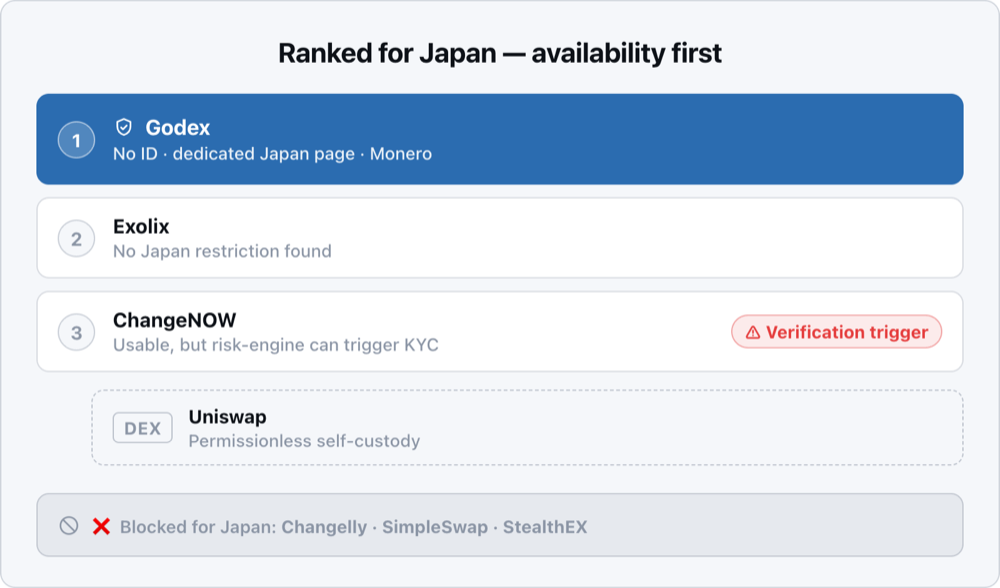
For crypto-to-crypto swaps that actually work from Japan without an account, the practical shortlist in 2026 is short: Godex, Exolix, and ChangeNOW, plus a decentralized option (Uniswap). This guide compares them, flags exactly which popular platforms shut Japan out, and is clear about the one thing no-KYC does not buy you here — a pass on tax.

TL;DR — Which No-KYC Exchange Works in Japan?
- Best for unconditional no-KYC that works from Japan: Godex — no registration, no ID at any amount, fixed-rate option, 936+ coins, and a dedicated Japan page. It also lists Monero, which no licensed Japanese exchange does.
- Lighter posture, available: Exolix — no signup, risk-based review only; no Japan restriction found.
- Fast, but conditional: ChangeNOW — quick and low-fee, but a risk engine can trigger verification around €2,000.
- Fully self-custodial: Uniswap — permissionless on-chain swaps, no account.
Two limitations to know first.
1. “No-KYC” is meaningless if the platform blocks you. Changelly, SimpleSwap, and StealthEX all name Japan as a restricted jurisdiction — they appear on global no-KYC lists but turn Japanese users away. Don’t build a plan around them.
2. No-KYC is not tax-free. Japan taxes crypto gains as miscellaneous income at rates up to roughly 55%, and that liability is yours whether or not the platform asked for your name.
Is No-KYC Legal in Japan? (As of July 2026)
Short answer: for an individual in Japan, using a non-custodial, no-KYC swap is generally treated as an unregulated activity rather than a criminal one — but it sits outside Japan’s licensing regime, and that distinction matters.
Crypto exchanges operating in or marketing to Japan must register with the Financial Services Agency (FSA) under the Payment Services Act, and follow AML rules under the Act on Prevention of Transfer of Criminal Proceeds, overseen by the self-regulatory Japan Virtual and Crypto Assets Exchange Association (JVCEA). Those rules bind the operator — mandatory KYC, record-keeping, and Japan’s unusually strict Travel Rule, which applies to transfers of any amount with no minimum threshold.
What that means for you: a foreign or non-custodial no-KYC swap is unregistered and unregulated in Japan rather than a licensed local service. We’re not aware of a rule that criminalizes an individual for using one, but you should verify current regulations. Either way, you don’t get the protections of a licensed venue — and you still carry every tax obligation that would apply if you’d used a domestic exchange.
One change worth knowing: Japan is moving crypto out of the Payment Services Act and into the Financial Instruments and Exchange Act (FIEA), reclassifying crypto-assets as “financial products.” The bill passed the House of Representatives on 11 June 2026, with implementation targeted for around fiscal 2027. It tightens rules on registered operators — it does not make no-KYC swaps illegal.
This is general information, not legal or tax advice. Rules change and enforcement varies — consult a qualified Japanese professional for your situation.
Godex.io is a non-custodial instant cryptocurrency exchange operating since 2017. It supports 936+ coins, requires no registration or KYC at any transaction size, and offers both fixed-rate and floating-rate swap modes. Processing time is 5–30 minutes after deposit confirmation.
Crypto Tax in Japan — Why No-KYC Isn’t Tax-Free
This is the section most listicles skip. Skipping KYC does not skip tax.
As of July 2026, Japan’s National Tax Agency treats individual crypto gains as miscellaneous income, taxed at progressive rates reaching up to about 55% once the 45% top national bracket and 10% local resident tax combine. That applies to realized gains — including crypto-to-crypto swaps — regardless of whether the platform collected your identity.
You’ve probably seen headlines about Japan cutting crypto tax to a flat 20%. Read the fine print:
- It is a reform proposal advancing in 2026, not enacted law. Don’t plan around it as if it’s in force.
- It is tied to the FIEA reclassification and would apply only to “specified crypto assets” handled by FIEA-registered (licensed) operators.
- Trades on foreign or unregistered platforms — which is exactly what a no-KYC swap is — would, on the current shape of the proposal, stay in the up-to-55% miscellaneous-income bucket.
So the uncomfortable truth for a privacy-minded Japanese holder: the anonymity of a no-KYC swap and the prospective 20% tax break may point in opposite directions. Use no-KYC swaps for what they’re genuinely good at — privacy, self-custody, coin access — and keep clean records so you can report accurately.
Bottom line: anonymity from a platform is not anonymity from the tax office. A no-KYC swap changes who asks for your passport. It doesn’t change what you owe.
How the Swaps Compare — Checked July 2026
The lead column here is the one every other Japan listicle forgets: does it actually work from Japan? A platform being “no-KYC” is meaningless if it blocks your IP at checkout. We checked each platform’s onboarding and restricted-country terms on 15 July 2026. We compared them on: years operating, custody model, KYC/AML policy, fee transparency, supported assets, security history, support — and, decisively for Japan, whether the platform actually serves Japanese users.
| Platform | Works from Japan? | KYC to complete a swap? | Fixed rate | Est. time (stated) |
|---|---|---|---|---|
| Godex | ✅ Yes (dedicated Japan page) | No — at any amount | ✅ | 5–30 min |
| Exolix | 🟡 Likely (no restriction found) | No unless flagged | ✅ | Minutes |
| ChangeNOW | 🟡 Likely (no restriction found) | No unless flagged (~€2,000) | ✅ | ~5 min |
| Uniswap (DEX) | ✅ Permissionless | No (connect wallet) | — (AMM) | Seconds–min |
| Changelly | ❌ Blocks Japan | — | — | — |
| SimpleSwap | ❌ Restricts Japan | — | — | — |
| StealthEX | ❌ Blocks Japan | — | — | — |
Methodology note: figures are each platform’s onboarding facts and restricted-country lists, verified on 15 July 2026 — “Est. time” is each platform’s stated figure, not a funded stopwatch measurement. “Likely” means no Japan restriction was found (an absence of a block, not a guarantee of availability). Thresholds and coin counts are indicative, not contractual. Published on the Godex blog — verify each platform’s current terms before you swap.
Best No-KYC Exchange by Use Case (Japan)
| If you want… | Best pick |
|---|---|
| Unconditional no-KYC that works from Japan | Godex |
| Monero / privacy-coin access | Godex |
| Lowest fees among Japan-available options | ChangeNOW (watch the trigger) |
| A refund if a swap is flagged | Exolix |
| Full self-custody (on-chain) | Uniswap |
Godex leads on Japan availability, privacy, and Monero — not on price; the table shows where each rival wins.
The Swaps That Work From Japan, Reviewed
Three non-custodial swaps clear the bar that matters here: they’re genuinely no-KYC and they serve Japanese users. No account holds your funds, and no profile accumulates your history.
Godex
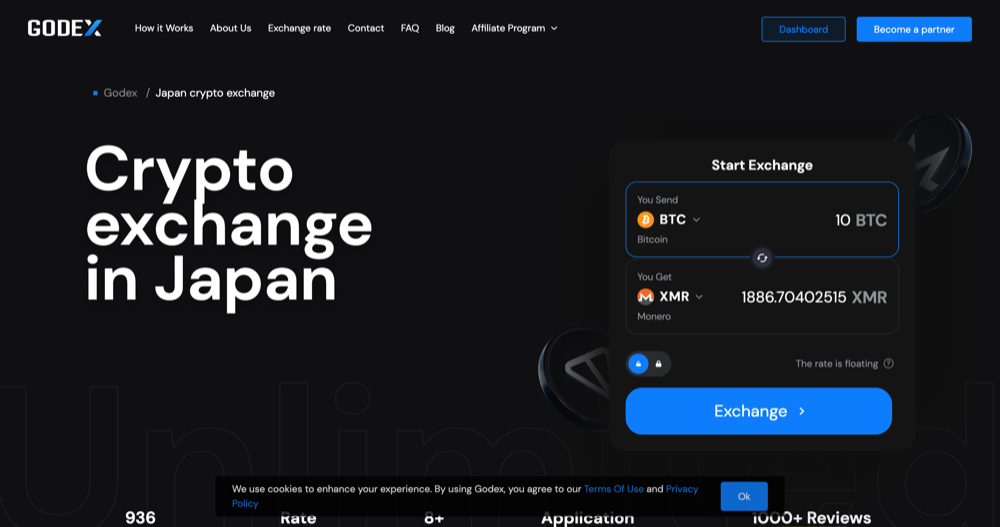
Godex is the hero of this list for Japan for concrete, verifiable reasons — none of them price. It requires no registration and no KYC at any size: no account, no email, no identity check, and the no-KYC policy is identical whether you swap ¥50,000 or ¥50,000,000. (Like every platform here, network- and liquidity-provider-level AML monitoring exists industry-wide; what Godex doesn’t do is run routine identity checks.) It’s non-custodial, runs a fixed-rate mode and a floating option, settles in 5–30 minutes, and lists 936+ coins.
Two things make it specifically strong for Japan. First, availability — Godex serves Japanese users and maintains a dedicated Japan exchange page, precisely where Changelly, SimpleSwap, and StealthEX shut Japan out. Second, Monero: privacy coins were purged from Japan’s licensed exchanges in 2018 (Coincheck delisted XMR, ZEC, and DASH under FSA pressure), so you cannot trade Monero on any FSA-licensed Japanese exchange today. Privacy coins have legitimate uses — financial privacy, fungibility, protection from wallet-level surveillance — and Godex still supports them: you can swap into Monero directly.
On fees: Godex runs above the market average (BTC→ETH spread roughly 1.67–2.14% by volume). You’re paying for a fixed rate, a track record since 2017, no-account privacy, and — for Japan — the fact that it actually works. You can swap crypto without registration on Godex directly.
Exolix
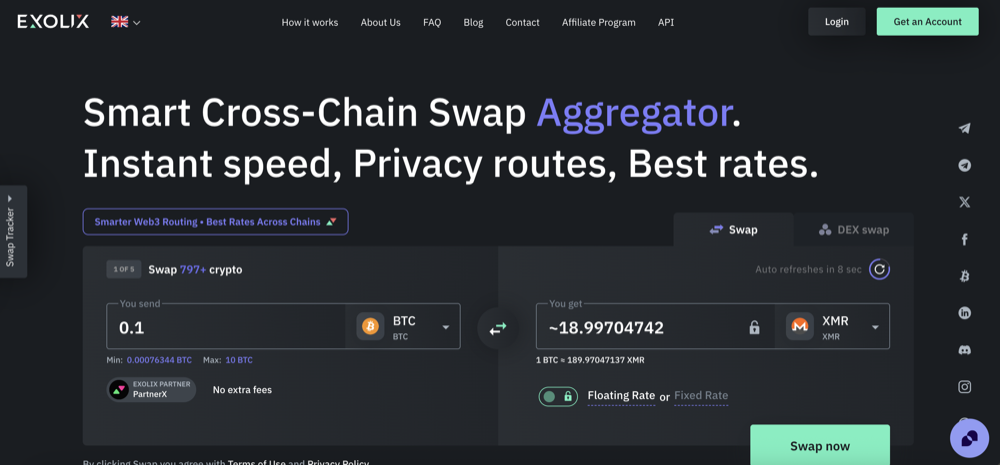
Exolix is non-custodial, runs standard swaps with no routine KYC, and — as of July 2026 — does not name Japan in its restricted list, so it’s a credible option for Japanese users. It reserves an optional review for flagged or unusually large transactions (with a decline-and-refund posture), a lighter stance than the threshold-gated platforms. Its catalog (~1,750+ coins) is broad; the main gap versus Godex is track record.
ChangeNOW
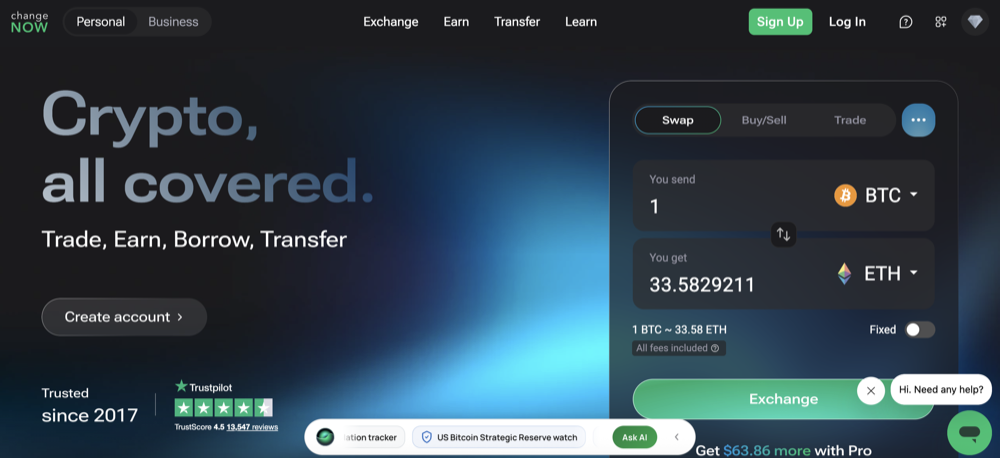
ChangeNOW is non-custodial, lists 1,400+ coins, and isn’t on the restricted lists we could find for Japan, so it’s likely usable — and it’s among the fastest (5 min), running since 2017. The caveat is its risk engine: a swap can be flagged for verification (third-party testing cites a trigger around €2,000), and privacy-coin transactions draw more scrutiny. Advertised fees are lower than Godex’s — a real advantage — but the no-KYC here is conditional, not unconditional.
Uniswap (DEX)
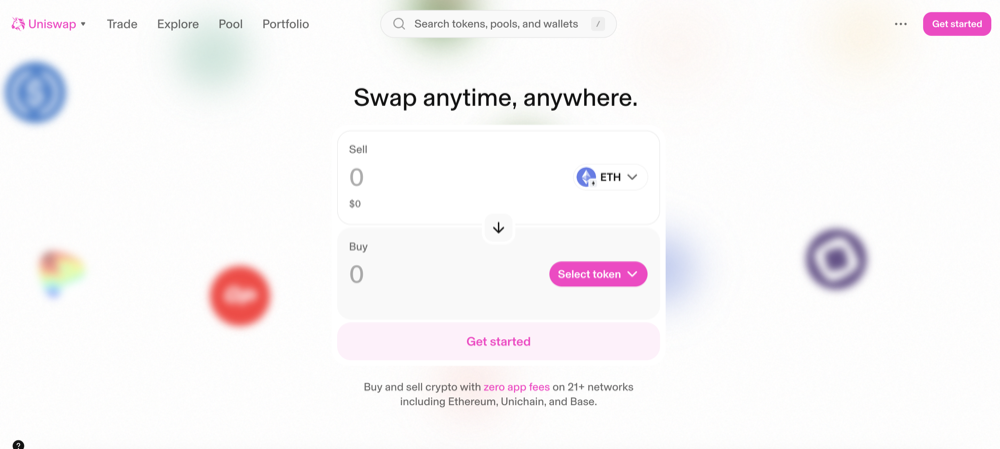
For zero counterparty and full self-custody, Uniswap is permissionless: connect a wallet and swap on-chain, no KYC by design (PancakeSwap on BNB Smart Chain is another option). Why a Japanese user might choose it: no account, no intermediary, wallet-based privacy. The downsides: Ethereum gas fees, no native cross-chain BTC swaps, smart-contract risk, and full user responsibility with no support desk. A different trust model, not a like-for-like replacement for a managed instant swap.
The Platforms That Block Japan (Don’t Build a Plan Around These)
These names show up constantly in global “best no-KYC exchange” lists. For a Japanese user they’re dead ends, and it’s worth saying so:
- Changelly names Japan as a restricted location in its current terms of use.
- SimpleSwap lists Japan among restricted countries, and its mobile app is unavailable in Japan.
- StealthEX explicitly names Japan as a restricted jurisdiction, despite its otherwise clean no-KYC posture and low ~0.4% fee.
The broader trend reinforces the point: even large offshore platforms have come under FSA pressure over Japanese access. “No-KYC” on a homepage doesn’t mean “available in Japan.” For the full cross-platform picture beyond Japan, see our complete no-KYC exchange list.
Which Coins Can You Swap Anonymously in Japan?
On a non-custodial swap that serves Japan, the coin list is wide:
- BTC, ETH, LTC, USDT, SOL, BNB — the majors, on every Japan-available platform here.
- XMR (Monero) and other privacy coins — supported on Godex and most non-custodial swaps, and not available on any FSA-licensed Japanese exchange since the 2018 delistings. To move into Monero, see the BTC→XMR swap page.
- Long-tail altcoins — Godex lists 936+ and Exolix ~1,750+, well beyond what a licensed exchange carries.
The rule of thumb: if two coins are both listed on the platform, you can usually swap between them with no account. DEXs are the exception — they only swap tokens on the same chain.
What You Can’t Do Anonymously in Japan
No-KYC swaps handle crypto-to-crypto. These steps bring identity back in:
- Buying crypto with yen (JPY) — bank transfer or card on-ramps run only through FSA-licensed, fully-KYC’d exchanges. There’s no anonymous JPY→crypto path.
- Cashing out to a Japanese bank account — the same KYC applies on the fiat off-ramp.
- Withdrawing from a licensed exchange — Japan’s Travel Rule attaches originator/beneficiary data to transfers of any amount, so moves in and out of licensed venues are recorded.
The realistic pattern: buy with JPY on a licensed exchange (full KYC once), then move to a non-custodial swap for private crypto-to-crypto activity.
No-KYC Limits: Minimums, Maximums, and AML Holds
“No-KYC limit” is a common search — the practical picture:
- Minimums are small and per-pair (e.g., Godex’s BTC→USDT minimum was 0.005 BTC on 15 July 2026; ChangeNOW’s floor is about $2).
- Maximums — the instant swaps here advertise no upper cap; Godex places no volume limit.
- The real ceiling is the AML trigger, not a posted number. A large or unusual swap can be flagged for verification by a partner liquidity provider — ChangeNOW around ~€2,000, Godex with no routine identity threshold but industry-standard monitoring.
- Liquidity and confirmations matter more than caps on big swaps.
Practical move: send a small test swap first, then the full amount.
Common Mistakes (and How to Avoid Them)
Most lost funds come from user error, not the platform:
- Wrong network. Sending USDT on the wrong chain (ERC-20 vs TRC-20 vs BEP-20) is the #1 way people lose funds. Match the network on both sides.
- Missing memo/tag. Coins like XRP and XLM need a memo/destination tag — omit it and funds can be stuck.
- Using a licensed exchange’s deposit address as your receiving wallet — some won’t credit swap deposits; use a wallet you control.
- Sending an unsupported token to a pair that doesn’t support it.
- Ignoring the fixed-rate window — with a fixed rate, send within the lock window or the quote expires.
Red Flags: Spotting a Scam Swap
- Lookalike domains. godex.io is the only official Godex domain — the lookalike godex.pro is a confirmed scam. Check the address bar before you send anything.
- “Send now, double your coins” or guaranteed returns — no legitimate swap does this.
- A rate that looks too good with no fixed-rate option — often a bait quote that changes at settlement.
- Pressure to “verify” by sending a deposit first to an address in a chat or Telegram DM.
Japan’s Licensed Exchanges (the KYC Incumbents)
For fiat on-ramps (buying crypto with yen), JPY withdrawals, and regulatory protection, the mainstream FSA-licensed venues are the right tool: bitFlyer, Coincheck, bitbank, GMO Coin, SBI VC Trade, and Rakuten Wallet. All require full KYC and enforce the Travel Rule.
One cautionary footnote on why custody matters: DMM Bitcoin was hacked for roughly $305M (about 4,503 BTC) in May 2024, wound down, and transferred its customer accounts to SBI VC Trade by March 2025. Licensed doesn’t mean risk-free — and a non-custodial swap sidesteps the “exchange holds my coins” failure mode entirely, because it never holds them.
Before You Start — Japan Checklist
- Buy crypto through a regulated Japanese exchange if you need a JPY on-ramp (KYC once).
- Withdraw to a wallet you control — never swap into a custodial exchange’s deposit address.
- Verify the official domain (godex.io, not godex.pro) before sending funds.
- Run a small test transaction before a large swap.
- Keep records of every swap for tax reporting (gains are taxable regardless of KYC).
- On a DEX, confirm the token’s official contract address, and remember non-custodial ≠ risk-free.
How to Swap Crypto Without ID — Step by Step
- Pick your receiving wallet (a wallet you control — MetaMask, Trust Wallet, a hardware wallet).
- Choose your pair on a no-account swap that serves Japan, like Godex.
- Lock a fixed rate so your quote survives the confirmation window.
- Send the deposit to the single-use address (match the network; add a memo if required).
- Receive in 5–30 minutes.
Two reminders this guide is built on: a large or unusual swap can still trigger an AML review anywhere in this category, and a swap that’s anonymous to the platform doesn’t make your gains anonymous to the tax office. Send a small test first, keep records, and file accurately.
Frequently Asked Questions
Are no-KYC crypto exchanges legal in Japan?
For an individual in Japan, such platforms are unregistered and unregulated rather than a licensed service; we’re not aware of a rule that criminalizes personal use, but you should verify current regulations. Japan’s FSA licensing and KYC rules bind exchange operators, not personal users. You still owe tax on any gains. This is general information, not legal advice.
Which no-KYC exchanges work from Japan in 2026?
Godex, Exolix, and (with a possible verification trigger) ChangeNOW are non-custodial no-KYC swaps that serve Japanese users; Uniswap is a permissionless DEX. Changelly, SimpleSwap, and StealthEX name Japan as a restricted jurisdiction and will turn Japanese users away, even though they appear on global no-KYC lists.
How do I swap crypto without ID in Japan?
Use a non-custodial instant swap that needs no registration — Godex is the straightforward pick — or a DEX like Uniswap. Choose your pair, send the deposit to a single-use address, and receive in minutes. Send a small test swap first and use a fixed rate to lock your quote.
Can I buy Monero (XMR) in Japan?
Not on a licensed Japanese exchange. Privacy coins were delisted from FSA-licensed venues in 2018 (Coincheck removed XMR, ZEC, and DASH under regulatory pressure). To swap into Monero from Japan, use a non-custodial platform that still lists it — Godex supports XMR among 936+ coins.
Do I pay tax on crypto swaps in Japan if I use a no-KYC exchange?
Yes. Japan taxes realized crypto gains — including crypto-to-crypto swaps — as miscellaneous income at rates up to roughly 55%, regardless of whether the platform verified your identity. No-KYC changes who asks for your ID; it does not remove your tax liability.
Is Japan really cutting crypto tax to 20%?
It’s a reform proposal advancing in 2026, not enacted law as of July 2026. Even if passed, current proposals tie the flat ~20% rate to FIEA-registered (licensed) operators — trades on foreign or unregistered no-KYC platforms would likely remain in the up-to-55% miscellaneous-income category.
Which no-KYC exchange has the lowest fees?
Among the Japan-available options, ChangeNOW advertises lower fees than Godex, and is fast — but its no-KYC is conditional (a risk engine can flag around €2,000). Godex costs more but adds a fixed-rate guarantee and unconditional no-KYC at any amount.
Do I need a VPN to use a no-KYC exchange from Japan?
For the Japan-available swaps (Godex, Exolix, ChangeNOW, Uniswap), no — they don’t block Japanese users, so a VPN isn’t required. The platforms that restrict Japan (Changelly, SimpleSwap, StealthEX) do so in their terms; a VPN doesn’t change your tax or legal obligations.
Can I use Trust Wallet or MetaMask with these swaps?
Yes. Any self-custodial wallet (Trust Wallet, MetaMask, a hardware wallet) works as the receiving wallet for an instant swap, and connects directly to a DEX like Uniswap. Use a wallet you control — not a licensed exchange’s deposit address.
Why do Changelly, SimpleSwap, and StealthEX block Japan?
Each names Japan as a restricted jurisdiction in its current terms, generally citing Japan’s strict FSA licensing regime. Whatever the reason, the practical result is the same: they’ll turn a Japanese user away, so don’t rely on them despite their no-KYC marketing.
What happens if a swap triggers AML review?
The partner liquidity layer can pause the swap and request verification or, on some platforms (Exolix), let you decline and take a refund. It’s uncommon on normal-sized swaps but possible on large or unusual ones across the whole category. A test swap and realistic sizes reduce the chance.
Is a no-KYC swap safer than a licensed Japanese exchange?
They protect against different risks. A non-custodial swap never holds your funds, so it can’t be hacked or frozen the way a custodial exchange can — DMM Bitcoin’s 2024 hack is the cautionary example. A licensed exchange offers regulatory protection, fiat on-ramps, and recourse. Many Japanese users sensibly use both.
Is there a limit on how much I can swap without KYC?
The Japan-available instant swaps advertise no maximum, but a large or unusual swap can trigger an AML review from a partner liquidity provider. Godex applies no routine identity threshold; ChangeNOW can flag around €2,000. Minimums are small and per-pair.
What’s the difference between anonymous and no-KYC?
No-KYC means the platform doesn’t collect your identity. Anonymous is broader — and imperfect. Even a no-KYC swap records on-chain data, and your gains remain reportable. Treat “no-KYC” as “no account and no ID upload,” not as “invisible.”
Start a Cryptocurrency exchange
Try our crypto exchange platform
Disclaimer: Please keep in mind that the content of this article is not financial or investing advice. The information provided is the author’s opinion only and should not be considered as direct recommendations for trading or investment. Any article reader or website visitor should consider multiple viewpoints and become familiar with all local regulations before cryptocurrency investment. We do not make any warranties about reliability and accuracy of this information.
Read more
You may well think that an article dedicated to a Tether price prediction or the Tether price in general is a little bit strange — it is a stablecoin after all. However, the price of Tether does fluctuate significantly, although it is nowhere near as volatile as non-stablecoin cryptos. This means that staying up to […]
In the article we share our vision at Zcash cryptocurrency main features and add several price predictions. As cryptocurrencies gain global acceptance and decentralisation slowly enters our lives, privacy becomes the main concern when talking about blockchain adoption. It is no secret that distributed ledger is by far the most secure and transparent technology ever […]
Chiliz coin (CHZ) offers a compelling opportunity for traders interested in the intersection of blockchain technology and sports. By enabling fans to influence team decisions through the Socios app, Chiliz directly monetizes fan engagement and connects with major sports teams like Juventus and Paris Saint-Germain. These partnerships not only enhance the platform’s visibility but also […]
The exponential growth of Bitcoin Satoshi Vision (BSV) against the general bear trend on the cryptocurrency market in autumn 2019 has impressed the community. Due to the increasing market capitalization, the newly emerged altcoin was ranked 5th on CoinMarketCap and managed to maintain its high position at the beginning of 2020. In the article we […]
EOS is definitely on the list of the strongest and most stable projects in the crypto world. Despite the fact that the currency entered the market less than 3 years ago, it consistently occupies one of the top 10 places in the rating for project capitalization. it is often called the “main competitor of Ethereum”. […]
XRP price prediction 2026-2027: bear, base, and bull scenarios with ranges and named sources, the resolved SEC case, live spot ETFs, and can XRP reach $10?