
 Alex Tamm
XMR is the hardest major cryptocurrency to find on a regulated exchange, and that’s a direct consequence of how the protocol works. Monero hides sender identity, recipient identity, and transaction amount on every transfer by default. Regulated platforms operating under AML frameworks don’t like that. In 2024 alone, 60 privacy-coin delistings were recorded (the highest single-year count since 2021), with Monero-specific removals surging sixfold compared to the prior year, according to Kaiko institutional data.
Anyone who needs to swap XMR in 2026 has to understand which platforms still support it, why the options divide into structurally different categories, and what “no-KYC” actually means in practice. Not every platform that claims it delivers it.
This guide covers Monero’s privacy architecture, the five best places to swap XMR today, and what to verify before sending funds anywhere.
Why Monero Is the Only Coin That Hides Everything by Default
Monero protects sender identity, recipient identity, and transaction amounts on every transfer. No opt-in required. No other major cryptocurrency does all three at the protocol level.
Three cryptographic mechanisms work together:
- Stealth addresses — Each transaction generates a one-time destination address using Elliptic-curve Diffie-Hellman (ECDH). The recipient’s actual public address never appears on the blockchain. Only their private view key can identify which outputs belong to them.
- RingCT (Ring Confidential Transactions) — Transaction amounts are masked using Pedersen commitments, a form of cryptographic proof that lets the network verify no new XMR was created without revealing the actual values transferred.
- Ring signatures — The real spending output is grouped with decoy outputs drawn from the existing blockchain, making it significantly harder for observers to identify which specific output was actually spent. Probabilistic analysis is possible, so ring signatures are a strong deterrent rather than a cryptographic absolute.
Bitcoin’s privacy model is different at every level: sender addresses, recipient addresses, and amounts are all permanently public on-chain. Tools like CoinJoin or Taproot can add partial obfuscation, but they’re opt-in, they depend on participation rates from other users, and they don’t hide amounts. Monero’s protections are mandatory baseline behavior. No configuration, no anonymity set to manage.
One caveat worth stating directly: Monero’s internal cryptography is robust, but privacy can erode at the boundary between XMR and transparent-chain assets. A May 2025 paper from the Weizenbaum Institute, TRM Labs, and TU Berlin analyzed Bitcoin-Monero trades on the Haveno P2P exchange and matched 50 out of 65 sampled trades to on-chain Bitcoin activity (an average of 2.5 Bitcoin transactions per matched trade). The Monero protocol itself wasn’t broken. The vulnerability lives on the Bitcoin side of the swap. For pure XMR-to-XMR or XMR-to-fiat activity, this risk doesn’t apply.
Why Your Exchange Options Are Getting Fewer
Major regulated exchanges have been removing Monero since 2024. The pattern is clearest in Europe: Kraken halted XMR trading and deposits for users across the European Economic Area on October 31, 2024. Customers had until December 31, 2024 to withdraw; any remaining balances were automatically converted to Bitcoin.
Kraken never publicly named the exact legal driver, and claims attributing the delisting specifically to MiCA haven’t been independently verified. Either way, the trend is clear: 60 privacy-coin delistings in 2024, custodial services tightening access under AML pressure, and no sign it reverses.
For users in affected regions, non-custodial platforms and P2P exchanges aren’t backup options anymore. They’re the main route.
Three Types of Monero Exchanges
XMR exchange options fall into three categories, each with a different trade-off between speed, privacy, and technical effort.
| Type | How It Works | KYC Risk | Setup Effort | Custody |
| Instant swap aggregator | Automated engine swaps crypto-to-crypto; no account | Low by default, not zero | Minimal — browser-based | Non-custodial |
| P2P decentralized exchange | Direct user-to-user trades; platform provides matching | Structurally none | Moderate — desktop app, often Tor | Non-custodial |
| Centralized exchange | Order book, registered platform | High — full KYC standard | Account + ID verification | Custodial |
Instant swap aggregators are the lowest-friction option: paste a destination address, send funds, receive XMR. No account, no identity document as a baseline. The catch: “no-KYC by default” isn’t a legal guarantee of zero verification. Automated risk-scoring can flag high-value transfers, funds with flagged chain history, or users in certain jurisdictions. Policies change without notice. No platform in this category can make an unconditional promise.
P2P decentralized exchanges are structurally KYC-free because there’s no central entity to enforce it. Trades happen directly between users, with cryptographic escrow holding funds during settlement. The tradeoffs: desktop software, Tor routing, and cross-chain privacy risks when Bitcoin is on either side of the trade.
Centralized exchanges are increasingly rare for XMR, particularly in Europe. Where still available, they require full KYC and carry custody risk.
The 5 Best Places to Swap XMR in 2026
1. Godex — Instant Swap, No Registration
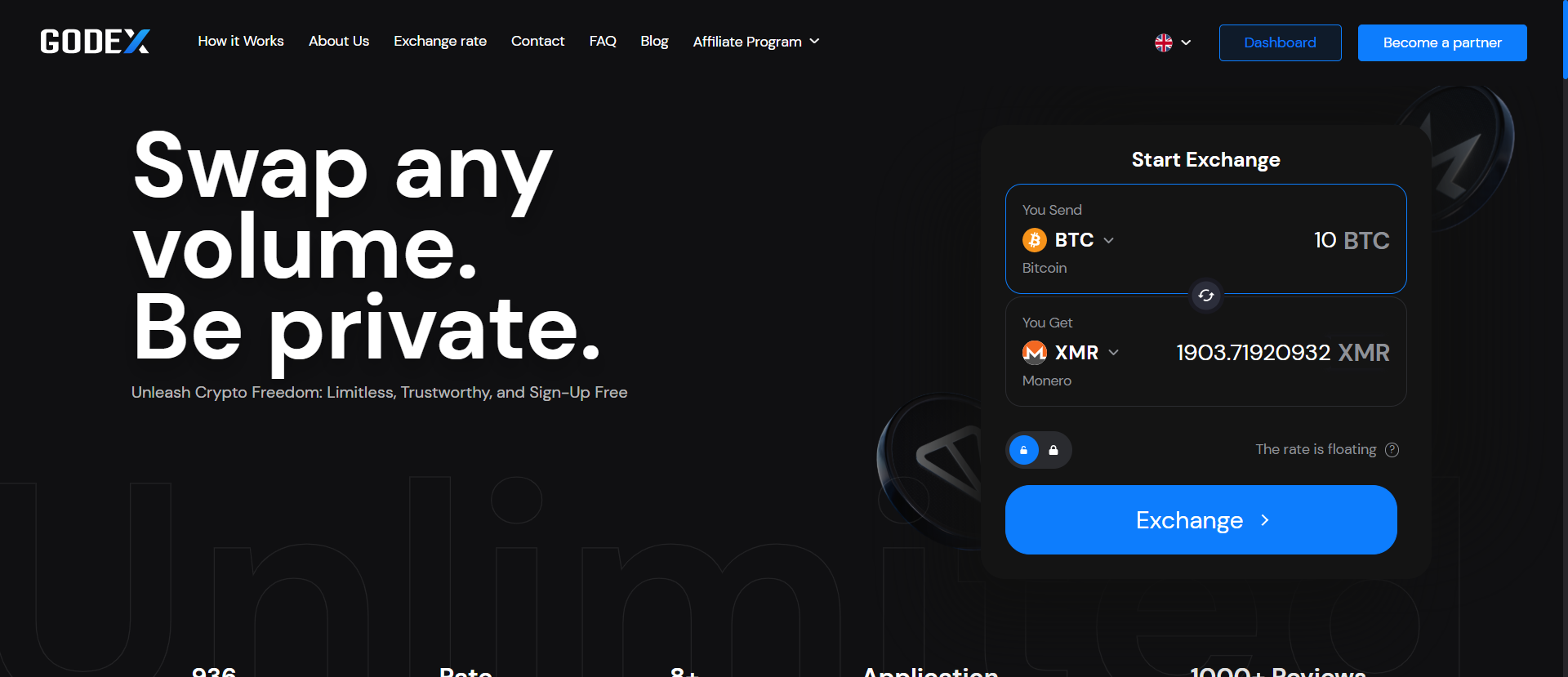
Godex runs a non-custodial instant swap model: no account creation, no registration, and no KYC as a default. The platform supports 900+ cryptocurrencies — independent 2026 reviews report between 923 and 937+ assets — which means XMR pairs extend well beyond the standard BTC and ETH options.
Swap processing typically takes 5 to 30 minutes. Two rate modes: fixed rate locks the exchange rate at order creation, protecting against price movement during confirmation; floating rate executes at market price at settlement, usually at a tighter spread when XMR isn’t moving sharply.
Godex processes the swap without holding funds in an intermediary balance. The transaction goes from your source wallet to a one-time swap address, and the converted XMR arrives directly at your specified destination. A swap only needs your destination wallet address. No email, no phone number.
The same caveat applies as with any instant swap service: automated compliance systems can flag specific transactions, and policies shift. For standard swaps without unusual chain history, this is typically not a factor. The fixed-rate lock is worth using when XMR is moving: you see the rate before committing, and it holds through confirmation.
Best for: Users who want to buy Monero instantly without a P2P desktop setup, especially those swapping from stablecoins or altcoins where instant swap services have a clear liquidity advantage over P2P order books.
2. Haveno — P2P Exchange Built on Monero’s Own Infrastructure
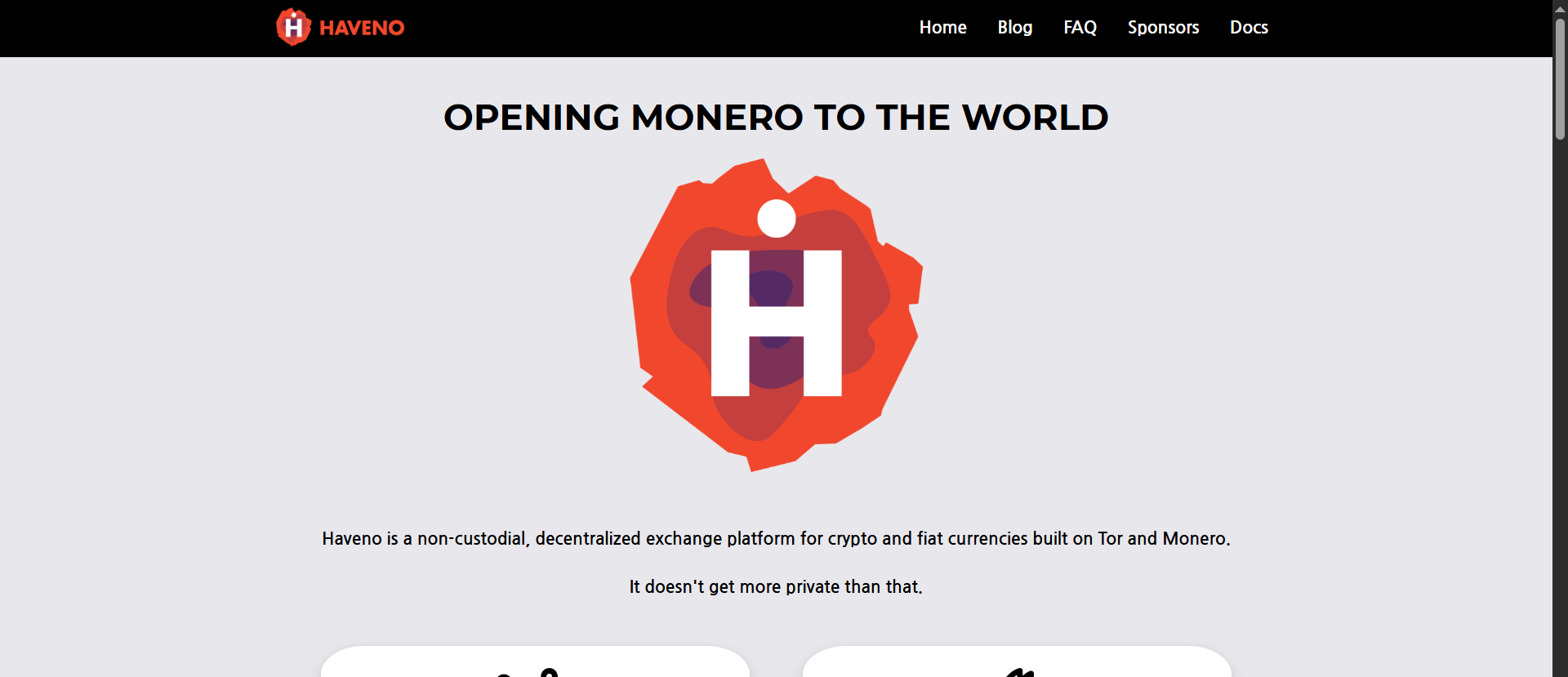
Haveno is an open-source decentralized exchange built specifically around Monero. All communications route through Tor. Trades execute directly between users, with no central server or operator involved.
The project reached mainnet readiness in late 2024. Active trading networks — most prominently RetoSwap — run on the Haveno protocol and support XMR trading against fiat currencies (USD, EUR, GBP) and crypto including Bitcoin, Ethereum, and Bitcoin Cash.
Because there’s no central operator, there’s no entity to run KYC. Instant swap services can’t replicate that structurally.
The specific caveat: BTC-XMR trades on Haveno carry the cross-chain deanonymization risk documented in the May 2025 paper. The vulnerability is at the Bitcoin boundary, not inside Monero’s cryptography. Trades against fiat or privacy-preserving assets on both sides carry a substantially lower risk profile.
Setup means downloading the desktop client and connecting through Tor. Not a browser-and-paste experience. For anyone where structural privacy is non-negotiable, it’s worth the friction.
Best for: Users trading XMR against fiat or wanting the strongest structural privacy guarantee, who are comfortable with a desktop P2P client.
3. Bisq — The Established P2P Route for BTC-XMR
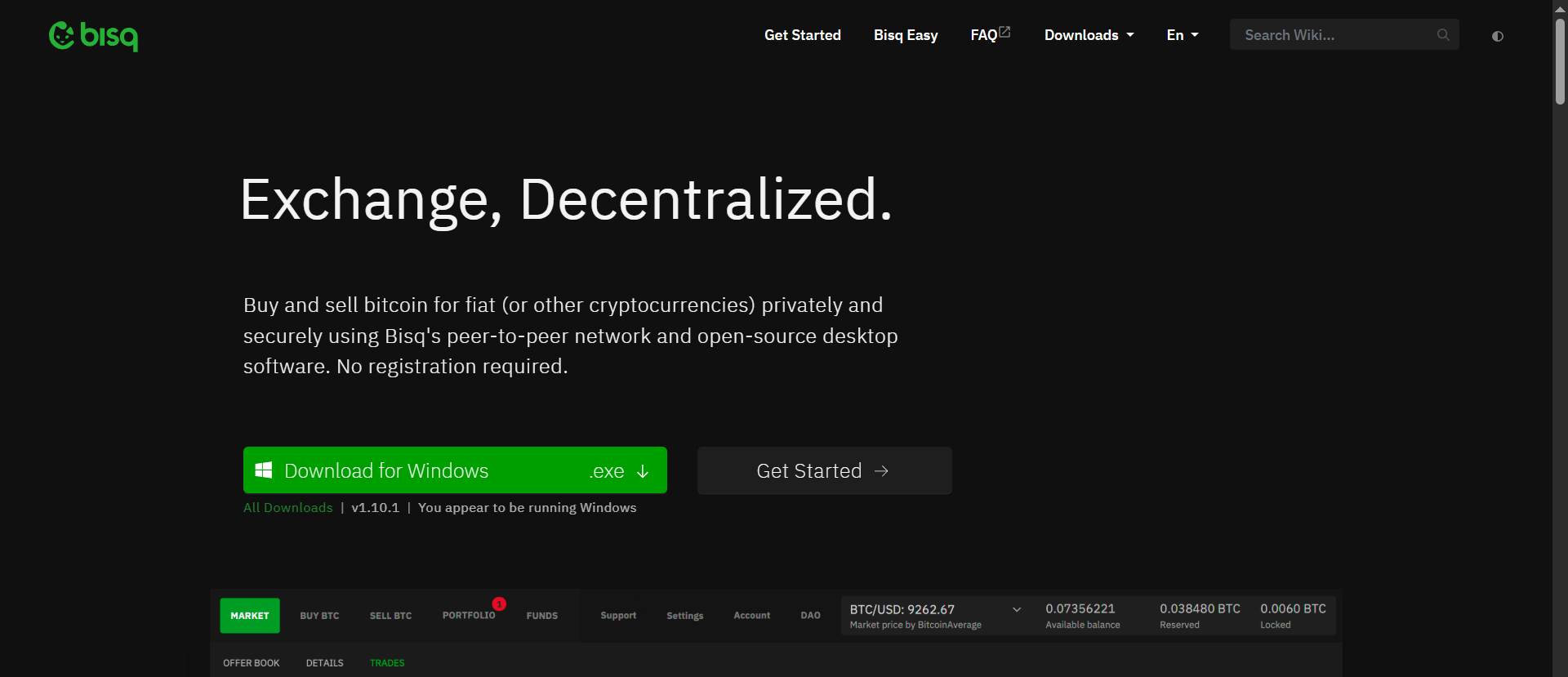
Bisq is open-source peer-to-peer desktop software for trading Bitcoin and select altcoins, including Monero. 2-of-2 multisig escrow secures funds throughout any active trade, so neither the platform nor a counterparty can access them unilaterally.
No registration, no ID check. The software has no mechanism for centralized KYC collection. Bisq v2.0 reports annual trading volumes above $200 million, which means reasonable liquidity for XMR/BTC pairs.
The main difference from Haveno: Bisq is Bitcoin-centric. XMR/BTC is the relevant trading pair. For users who already hold BTC and want to move into Monero, this is a direct, well-established route. The same cross-chain transparency risk applies at the Bitcoin side.
Best for: Users who want to buy Monero with Bitcoin through a long-running P2P platform with high volume, without registration.
4. SideShift — Minimalist Crypto-to-XMR Shifts
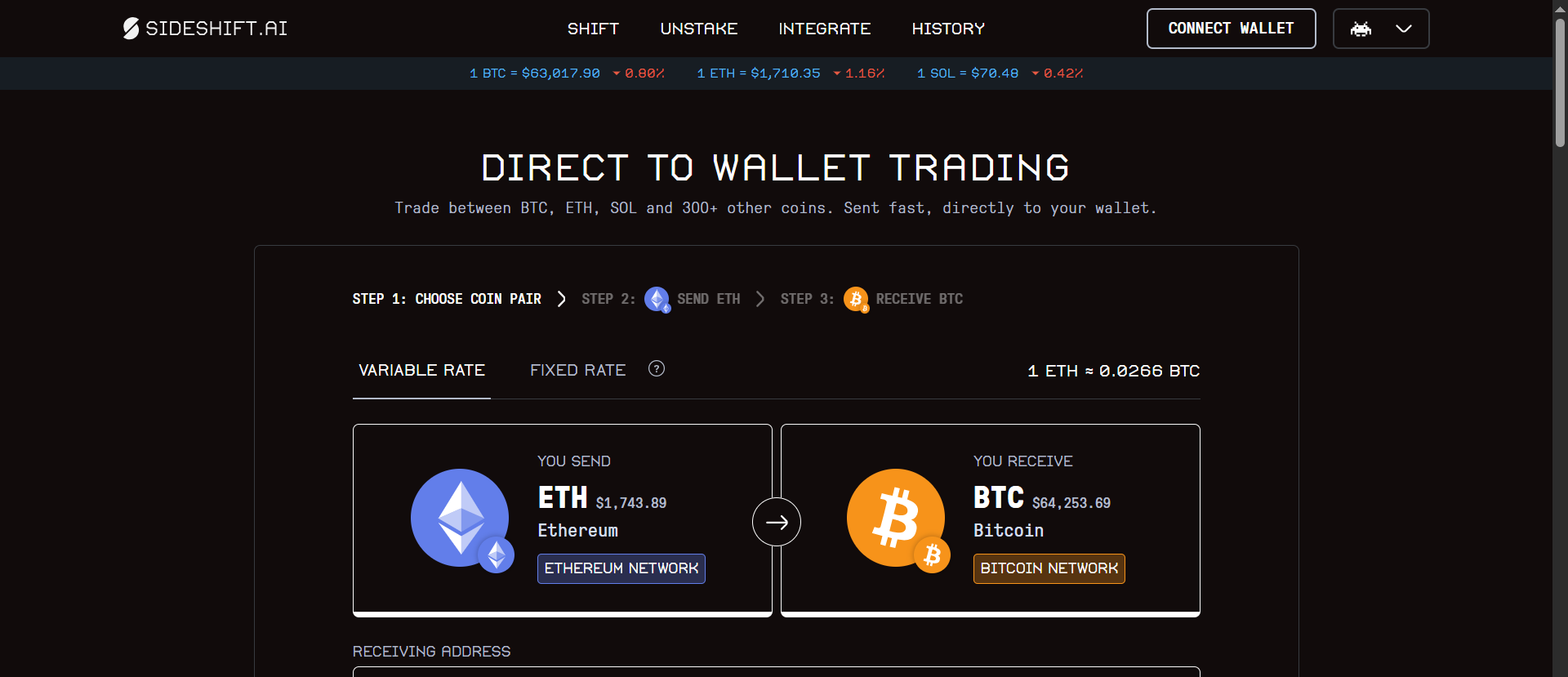
SideShift is a non-custodial automated service that processes crypto-to-crypto conversions, including XMR pairs, without an account. Funds go in on one side, converted funds come out on the other, with no intermediary holding wallet. The platform calls it “shift” rather than “exchange”, which is basically what it is.
Two rate modes: variable shifts execute at market price; fixed shifts lock the rate at a small premium. XMR pairs process within the standard Monero confirmation window of roughly 20 minutes. Crypto-only — no fiat channels.
As with all no-account swap services, the no-KYC default isn’t unconditional. High-value or algorithmically flagged transactions can trigger internal review.
Best for: Users who prefer a clean, minimal interface for crypto-to-XMR conversions without fiat requirements or account management.
5. Peach Bitcoin — No-KYC Fiat-to-BTC Gateway
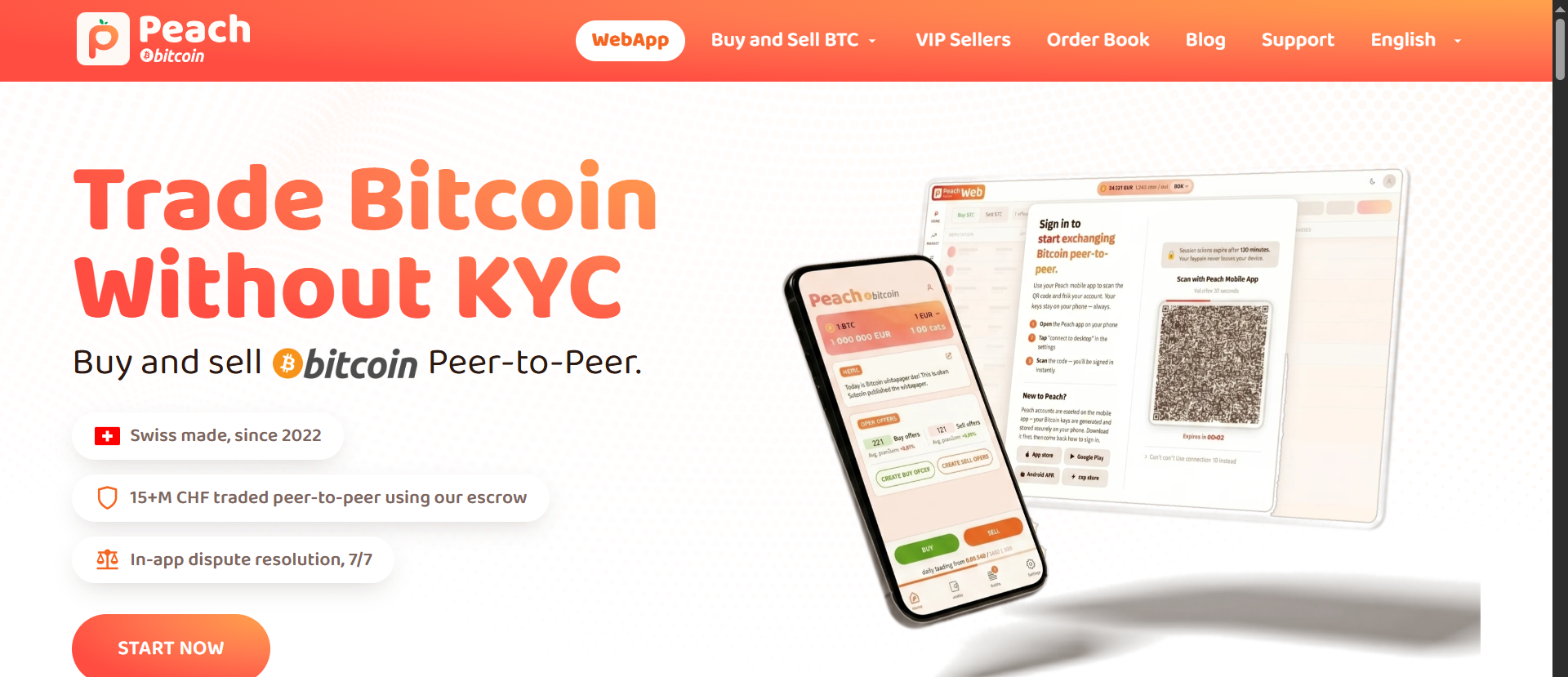
Peach Bitcoin is a peer-to-peer Bitcoin marketplace that lets users buy BTC with fiat without identity verification, up to 1,000 CHF per day (~$1,100 USD). Trades settle through multi-signature escrow with end-to-end encrypted communication between counterparties. Private keys stay on-device at all times. Available on iOS, Android, and APK.
Peach Bitcoin doesn’t swap XMR directly — it’s Bitcoin-only. The reason it belongs in this guide: for anyone who needs to move fiat into the XMR ecosystem without a KYC touchpoint, it fills the gap cleanly. Acquire BTC on Peach with no identity check, then route it to Haveno or Bisq to swap into Monero, or use Godex for the BTC-to-XMR conversion. No registered account at any step.
The daily limit is real — high-volume sellers can opt into voluntary KYC to remove caps, but for standard amounts the limit-free tier covers most use cases.
Best for: Users who need a fiat-to-BTC on-ramp without KYC as the first step in a privacy-preserving XMR acquisition flow.
How to Buy Monero Instantly: Step by Step
Using an instant swap service requires no account and typically completes within 30 minutes. The process is consistent across platforms in this category.
- Set up a non-custodial Monero wallet — Monero GUI, Feather Wallet, or a hardware wallet with XMR support. Copy your receiving address.
- Open the swap interface — Select your source currency (ETH, USDT, BTC, or other) as the input and XMR as the output.
- Enter the amount and choose a rate mode — Fixed rate if you want price certainty; floating rate if a small variance is fine.
- Paste your XMR wallet address — This is where funds arrive. Check it twice; Monero transactions can’t be reversed.
- Send to the generated deposit address — The platform creates a unique one-time deposit address. Send exactly the displayed amount from your source wallet.
- Wait for confirmations — Monero needs at least 10 block confirmations, roughly 20 minutes. The status page updates as each one lands.
- Receive XMR in your wallet — Funds arrive directly at your address. The platform retains nothing.
What to Verify Before Using Any XMR Platform
Not all no-KYC claims are equal. Before committing funds to a specific service, check these five things:
- Custody model — Does the platform hold your funds between the send and the receive, or does the swap execute wallet-to-wallet without an intermediate balance? Non-custodial execution means one fewer point of failure.
- KYC policy specifics — Does the platform explain the circumstances under which it might request verification? Blanket “never KYC” claims with no conditions attached are worth scrutinizing.
- Effective rate vs. listed rate — Instant swap platforms charge through the spread, not a visible fee. Compare the effective output amount against a live market price before confirming.
- XMR confirmation time — Monero requires 10 block confirmations (~20 minutes) before funds become spendable. Any platform promising XMR in under 10 minutes is either pre-funding from its own reserves (a custodial risk) or misrepresenting the timeline.
- Operational track record — How long has the platform been running? Have there been documented cases of frozen funds, retroactive KYC, or unannounced policy changes? Community aggregators like KYCnot.me track this data across platforms.
Frequently Asked Questions
Why not just use Zcash? It’s still on Coinbase, Kraken doesn’t drop it, and the cryptography is supposedly stronger.
Zcash has better exchange access precisely because its privacy is optional, not mandatory. Regulators can require exchanges to monitor the transparent layer, which covers most real Zcash transactions — in late 2025, Arkham Intelligence de-anonymized more than half of all Zcash activity by tracing transparent address interactions. Monero’s privacy is on by default for every transaction; there’s no transparent mode to exploit. The tradeoff is access: Monero gets delisted, Zcash stays listed. If your actual goal is staying on regulated platforms with easy liquidity, Zcash is the easier choice. If your goal is transactions that are actually private by default regardless of user behavior, Monero is the only major coin that delivers that.
How is swapping BTC-to-XMR private if my Bitcoin address is already known?
It’s not fully private — and a 2025 academic paper documented this specifically. Researchers from the Weizenbaum Institute analyzed Bitcoin-Monero trades on Haveno and matched 50 out of 65 sampled trades to on-chain Bitcoin activity. The Monero side of those trades was never broken; the deanonymization happened entirely on the Bitcoin blockchain. Once XMR is in your wallet, the Monero protocol protects it. The weak point is everything before it arrives: the Bitcoin you’re sending from, how that Bitcoin was acquired, and whether it leads back to a KYC account. Swapping from a coin with a transparent chain doesn’t automatically become anonymous just because the destination is Monero.
Do I still owe taxes if I swapped on a no-KYC platform with no paper trail?
Yes. Tax authorities treat the individual as the responsible party, not the exchange. The IRS and HMRC both apply this explicitly: a swap that generates no exchange-side record doesn’t erase your obligation to report the gain. The 1099-DA broker reporting form applies to US-based centralized broker activity from 2025 forward, but it doesn’t redefine what’s taxable — it only affects what gets reported to the IRS automatically. A no-KYC swap means no one files that form on your behalf. Your reporting obligation exists regardless. Privacy at the exchange layer and tax compliance are separate issues, and conflating them creates a specific category of legal risk that has nothing to do with how private the underlying swap was.
How do I know what the real exchange rate is — are these instant swaps just charging a hidden spread?
They are charging a spread, and it’s not hidden if you know to check. Instant swap platforms don’t charge a visible percentage fee; they build their margin into the difference between the rate they execute at and the market rate at that moment. The effective cost is typically in the range of 0.5–3% depending on the pair, the platform, and current liquidity. Before confirming a swap, compare the output amount shown against a live market price on CoinGecko or a rate aggregator. A fixed-rate lock protects against the market moving during confirmation. The practical test is simple: if the displayed output is significantly lower than the market-rate equivalent, the spread is wide. This is a transparency issue worth checking, not a scam — but the cost is real.
The Bottom Line
Custodial Monero access has narrowed significantly since 2024. Non-custodial options have quietly expanded. The regulatory pressure behind those delistings is also the clearest sign that Monero works as designed. Demand for this kind of infrastructure isn’t declining.
Which platform makes sense depends on what you actually need. For speed and minimal setup, instant swap services like Godex handle most XMR pairs in under 30 minutes without registration. Haveno and Bisq are the call if structural privacy matters more than convenience, especially for fiat trades. Peach Bitcoin handles the fiat-to-BTC leg without KYC, which plugs directly into any of the XMR swap options above.
One thing is consistent across all of them: your XMR goes from your wallet to your wallet, without passing through anyone else’s.
Start a Cryptocurrency exchange
Try our crypto exchange platform
Disclaimer: Please keep in mind that the content of this article is not financial or investing advice. The information provided is the author’s opinion only and should not be considered as direct recommendations for trading or investment. Any article reader or website visitor should consider multiple viewpoints and become familiar with all local regulations before cryptocurrency investment. We do not make any warranties about reliability and accuracy of this information.
Read more
Chiliz coin (CHZ) offers a compelling opportunity for traders interested in the intersection of blockchain technology and sports. By enabling fans to influence team decisions through the Socios app, Chiliz directly monetizes fan engagement and connects with major sports teams like Juventus and Paris Saint-Germain. These partnerships not only enhance the platform’s visibility but also […]
The exponential growth of Bitcoin Satoshi Vision (BSV) against the general bear trend on the cryptocurrency market in autumn 2019 has impressed the community. Due to the increasing market capitalization, the newly emerged altcoin was ranked 5th on CoinMarketCap and managed to maintain its high position at the beginning of 2020. In the article we […]
EOS is definitely on the list of the strongest and most stable projects in the crypto world. Despite the fact that the currency entered the market less than 3 years ago, it consistently occupies one of the top 10 places in the rating for project capitalization. it is often called the “main competitor of Ethereum”. […]
XRP price prediction 2026-2027: bear, base, and bull scenarios with ranges and named sources, the resolved SEC case, live spot ETFs, and can XRP reach $10?
In this article we will talk about Ripple (XRP) and its price prediction. What is Ripple (XRP) Ripple is a San Francisco-based startup that was launched in 2012 by Ripple Labs as a global network both for cross-currency and gross payments. Ripple history began in 2004 with the discussions around the digital coin in the […]
You may well think that an article dedicated to a Tether price prediction or the Tether price in general is a little bit strange — it is a stablecoin after all. However, the price of Tether does fluctuate significantly, although it is nowhere near as volatile as non-stablecoin cryptos. This means that staying up to […]