
 Linda Larsen
Table of Contents
Every second you wait for a swap to complete is a second the market is moving without you. We broke down exactly how fast ten leading platforms actually are — and the results might surprise you.
Speed is the defining battleground of crypto in 2026. Not security. Not fees. Speed. When Bitcoin can swing 3-5% within ten minutes, the gap between a 45-second swap and a 45-minute one isn’t cosmetic — it’s measurable in dollars. Crypto prices are extremely volatile, and some smaller-cap assets can swing 3-5% within 10 minutes, leaving traders feeling like they are playing Russian Roulette if they need to wait that long for a swap.
But here’s the problem: “instant” is one of the most abused words in the industry. Platforms slap it on their homepage while routing your swap through three confirmation windows and a manual review. So we did the work — analyzing methodology, independently verifiable benchmarks, and real-world swap timelines across ten platforms — to give you a straight answer to a simple question: which crypto exchange is actually fastest in 2026?
Before the rankings, one critical distinction needs to be made.
The 2026 Speed Comparison Table
| Platform | Type | Avg. Swap/Execution Time | Identity Approach | Best Use Case |
|---|---|---|---|---|
| Godex.io | Non-custodial instant | 5–30 min (blockchain-dependent) | Privacy-first | Confidential swaps, BTC/ETH/privacy coins |
| Symbiosis Finance | Cross-chain DEX | 45–60 seconds | Wallet-only | DeFi cross-chain swaps |
| 1inch | DEX aggregator | 1–3 min (EVM chains) | Wallet-only | Large same-chain DeFi swaps |
| Binance | CEX (order book) | ~0.001 sec execution | Full KYC | High-volume, all-asset trading |
| OKX | CEX + L2/Lightning | Sub-ms execution; <1 min Lightning BTC | Full KYC | BTC Lightning, L2 withdrawals |
| Phemex | CEX (order book) | ~0.95 milliseconds | Full KYC | HFT, derivatives |
| BYDFi | CEX (order book) | ~0.01 seconds | Full KYC | Performance spot + derivatives |
| Coinbase Advanced | CEX (regulated) | Near-instant fiat to trade | Full KYC | Fiat onboarding, compliant trading |
| Kraken | CEX (regulated) | Fast, stable | Full KYC | Reliable fiat-to-crypto |
| MEXC | CEX (altcoin-focused) | Fast | Full KYC | Early-access altcoin trading |
What “Exchange Speed” Actually Means (And Why Most Comparisons Get It Wrong)
There are two completely different things people mean when they say a crypto exchange is “fast,” and conflating them leads to bad decisions.
Trade execution speed is how quickly a centralized exchange (CEX) matches your order in its internal database. This is measured in milliseconds and is essentially a software performance metric — no blockchain involved. Binance is well known for having the fastest trade execution engine among the top crypto exchanges. Its matching engine can process up to 1.4 million orders per second at peak throughput.
Swap completion time is how long it takes from the moment you send your crypto to a non-custodial exchange until the swapped asset arrives in your wallet. This is measured in minutes and is primarily governed by blockchain physics — specifically, how many network confirmations are required before the exchange can execute your trade.
Actual completion times depend on blockchain network conditions, but platform efficiency varies significantly. Top-tier exchanges process their portion of the transaction within minutes, with total swap time primarily determined by network confirmations rather than platform processing delays.
Neither type is objectively “faster” — they are measuring different things. A CEX can match your Bitcoin order in 0.01 seconds, but if you factor in deposit confirmation time (10-30 minutes for BTC on-chain), the actual time-to-trade can be much longer. A non-custodial instant exchange that completes your BTC-to-ETH swap in 15 minutes, start to finish, with no account required, serves a completely different need.
This article covers both categories, ranked within their respective contexts.
The Variables That Determine Your Wait Time
Before jumping to rankings, understanding the two major speed variables will help you make smarter choices:
- Blockchain confirmation requirements: Bitcoin averages one new block every 10 minutes. Ethereum produces blocks every 12 seconds. Solana and other Layer 1s can confirm in under a second. The network you’re sending from is often the biggest bottleneck — not the exchange itself.
- Platform-side processing: This includes rate locking, liquidity sourcing, and output transaction broadcast. Top-tier exchanges process their portion of the transaction within minutes, with total swap time primarily determined by network confirmations rather than platform processing delays. The best platforms minimize this variable aggressively.
A smart platform minimizes what it controls — its own processing time — and is transparent about what it cannot control (the blockchain). Keep that standard in mind as you read the rankings below.
The 2026 Speed Test Rankings
Privacy-Focused Instant Swap Platforms (Non-Custodial)
#1 — Godex.io | Best Overall for Private Instant Swaps
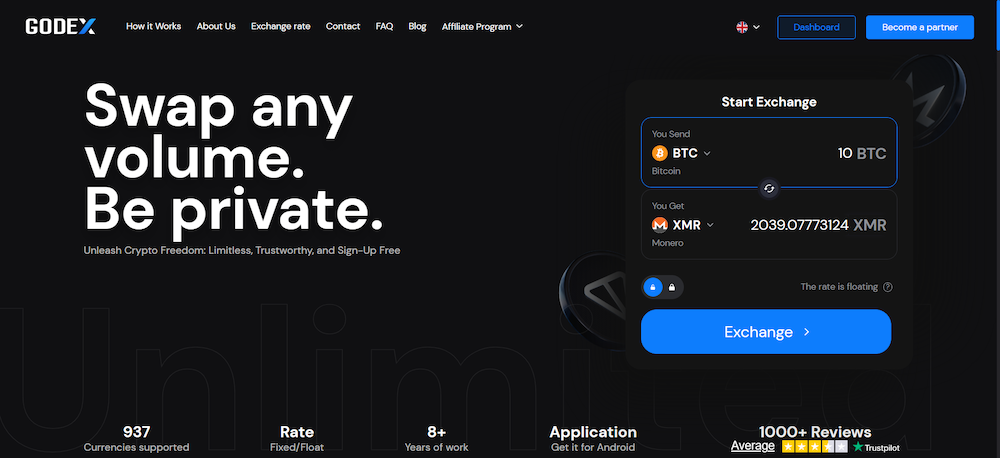
Typical completion time: 5–30 minutes | Processing overhead: Minimal
Godex is the benchmark for privacy-first instant exchanges in 2026. The platform’s core speed advantage comes from an architecture designed to eliminate every delay that isn’t imposed by the blockchain itself. Unlike some competitors that require 2-3 block confirmations for BTC, Godex often accepts 1 confirmation for smaller amounts, speeding up the entire process. That single design decision can shave 10-20 minutes off a Bitcoin swap compared to platforms that wait for three confirmations.
The platform’s instant-access model removes another hidden time sink. Godex is designed for frictionless entry — you transact as a guest every time, with no account management overhead slowing you down. That streamlined approach means your first swap runs at exactly the same speed as your hundredth.
What makes Godex particularly strong for active traders is the breadth of its network coverage — 937 supported cryptocurrencies, fixed and floating rate options, and no imposed volume limits. Standard transactions are processed automatically through a clean, non-custodial flow, keeping the platform fast and consistent for everyday swaps.
Key speed factors:
- Accepts 1 BTC confirmation for smaller amounts (vs. industry standard of 2-3)
- Instant-access design — minimal onboarding friction, no account management overhead
- Automated, non-custodial flow with no manual review stage for standard transactions
- Optimized for privacy coins (XMR, ZEC) with consistent handling across all 937 assets
Best for: Traders who prioritize end-to-end speed and a high-privacy trading experience, especially for BTC, ETH, and privacy coin pairs.
Website: godex.io
#2 — Symbiosis Finance | Fastest Cross-Chain DEX
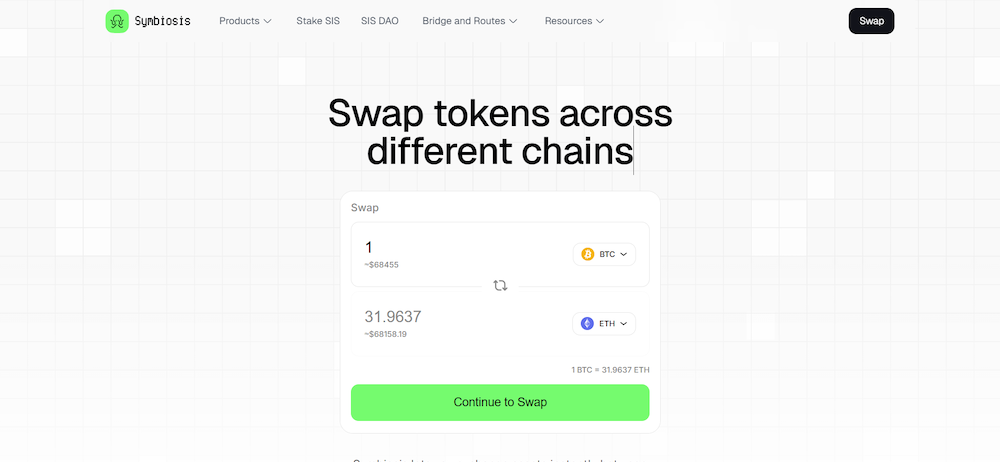
Typical completion time: 45–60 seconds | Processing overhead: Near-zero (on-chain)
Symbiosis.finance claims the title of fastest crypto swap platform in 2025, completing cross-chain transactions in 45-60 seconds according to independent testing. The decentralized liquidity protocol enables instant swaps between blockchains like Ethereum, BNB Chain, Solana, and Avalanche — all from a single interface without registration or KYC. The platform’s speed comes from sophisticated smart routing that automatically finds the fastest execution path across 30+ networks.
These speeds are achievable because Symbiosis operates purely in DeFi territory — all execution is on-chain via smart contracts, with no centralized processing layer. The trade-off is that you need a compatible wallet (MetaMask, WalletConnect) and some familiarity with gas fees. It is not a beginner-friendly interface, but for technically comfortable users moving assets across EVM-compatible chains, it is currently the fastest option available.
Best for: DeFi-native users doing frequent cross-chain swaps between Ethereum-compatible networks.
Website: symbiosis.finance
#3 — 1inch | Fastest Same-Chain DEX Swaps
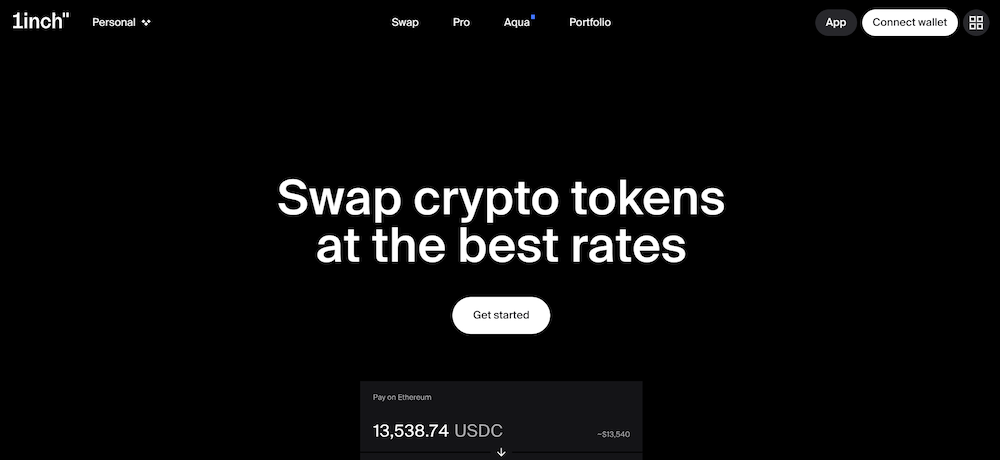
Typical completion time: 1–3 minutes (EVM chains) | Processing overhead: Gas-dependent
1inch is not an exchange — it is a DEX aggregator that routes your swap across dozens of liquidity pools simultaneously, automatically finding the path that delivers the best price and fastest settlement. For same-chain swaps on Ethereum and its Layer 2 ecosystem, it consistently outperforms single-pool DEXes on both price and execution time.
The core value of 1inch is in routing logic. A single swap can split across multiple pools to reduce price impact and slippage. This matters most on larger trades or on networks with fragmented liquidity. No accounts or KYC are required — access depends entirely on your wallet.
The caveat: during periods of Ethereum network congestion, gas costs can spike and slow perceived speed. On Layer 2 networks (Arbitrum, Optimism, Base), the experience is dramatically faster and cheaper.
Best for: Experienced DeFi users making large single-chain token swaps where slippage matters as much as speed.
Website: 1inch.io
Centralized Exchanges (Order-Book Speed)
#4 — Binance | Fastest All-Round CEX
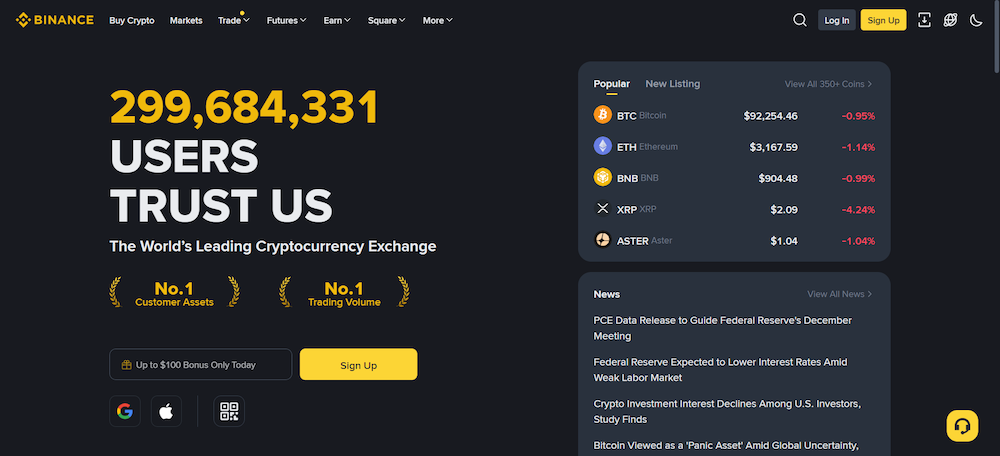
Trade execution: ~0.001 seconds | Crypto withdrawal: 5–30 minutes (network-dependent)
For pure trade-execution speed, no centralized exchange comes close to Binance in 2026. Binance is well known for having the fastest trade execution engine among the top crypto exchanges. Its matching engine can process up to 1.4 million orders per second at peak throughput. In practice, market orders fill almost instantaneously even during high volume days.
The platform’s size gives it a structural advantage: deep liquidity across hundreds of pairs means your order executes at the expected price without slippage-driven delays. Withdrawal speeds benefit from large hot wallet reserves and multi-network support, giving users the option to select faster chains (Solana, BNB Smart Chain, Lightning) for withdrawals.
The significant trade-off for privacy-focused traders is mandatory KYC. Binance requires full identity verification before you can trade at any meaningful volume. If you are comfortable with that requirement, the execution speed is unmatched in the CEX category.
Best for: Active traders who require KYC-compliant infrastructure and need absolute minimum order-matching latency.
Website: binance.com
#5 — OKX | Best CEX for Lightning and Layer 2 Speed
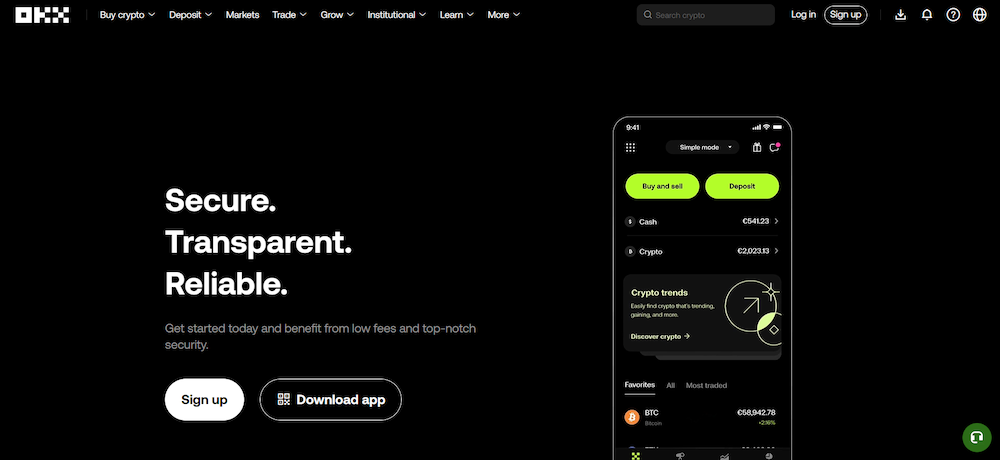
Trade execution: Sub-millisecond | BTC Lightning withdrawal: Under 1 minute
OKX has made Layer 2 adoption a strategic priority in a way that materially affects withdrawal speeds — the thing most traders actually care about. OKX was among the first major exchanges to integrate Bitcoin Lightning Network back in 2021, enabling quick and cheap BTC deposits and withdrawals.
Lightning Network withdrawals from OKX settle in seconds rather than the 10-30 minutes required for on-chain Bitcoin transactions. For users who hold BTC and regularly need to move it to Lightning-compatible wallets or payment channels, this is a game-changer. The broader Layer 2 integration also means cheaper and faster Ethereum withdrawals via Arbitrum and Optimism.
OKX also requires KYC, and its interface is dense enough to overwhelm beginners. But for traders who spend time in the Lightning and L2 ecosystem, its infrastructure investment pays off directly in speed.
Best for: Bitcoin holders who use Lightning Network and traders who prioritize Layer 2 withdrawal speeds.
Website: okx.com
#6 — Phemex | Sub-Millisecond Execution
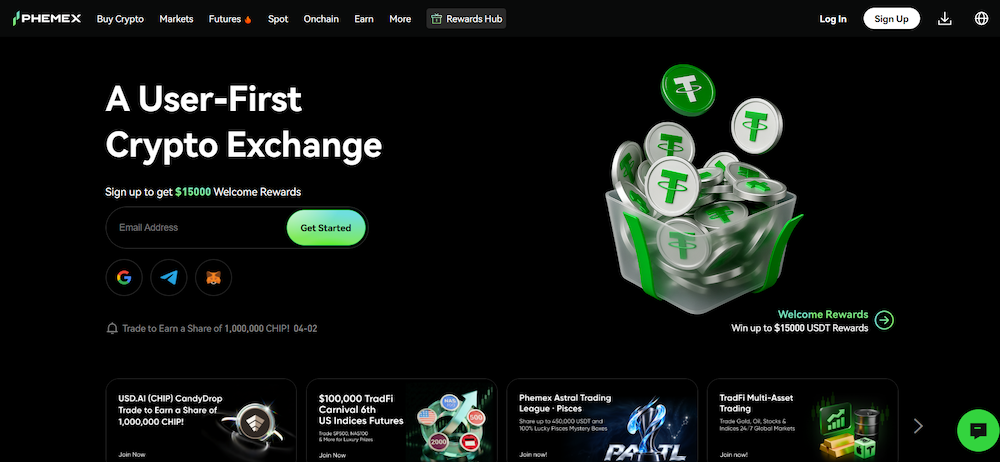
Trade execution: ~0.95 milliseconds | Crypto withdrawal: Network-dependent
Phemex excels in transaction speed, with an average execution time of under 1 millisecond. During our tests, the platform consistently executed trades in approximately 0.95 milliseconds, which is significantly faster than many competitors. The CrossEngine trading system can process up to 300,000 transactions per second, ensuring that trades are executed almost instantaneously.
Phemex occupies a specific niche: traders who need extremely low-latency order execution for derivatives, futures, and spot contracts. Its infrastructure is purpose-built for high-frequency environments where sub-millisecond differences translate into real edge.
For average retail traders, the speed difference between 0.01 seconds and 0.95 milliseconds is imperceptible. But for algorithmic traders running strategies that depend on execution timing, Phemex’s numbers are credible and consistently verifiable.
Best for: Algorithmic and high-frequency traders who need measurably low execution latency.
Website: phemex.com
#7 — BYDFi | Fastest Measured Execution Speed
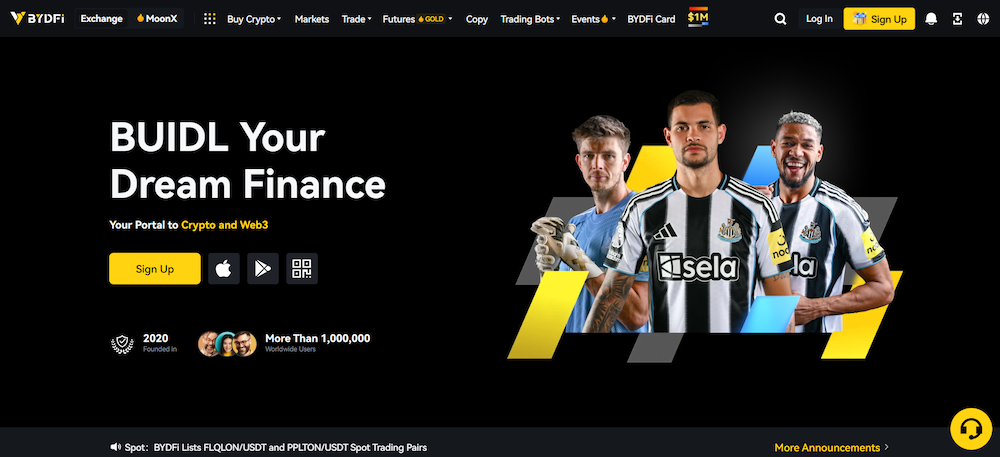
Trade execution: 0.01 seconds | Latency: ~0.02 milliseconds
In our tests, BYDFi showed to be the fastest crypto trading platform with excellent scoring across the board. On average, trades were executed within 0.01 seconds from the moment of initiation to confirmation. BYDFi has exceptionally low latency, with our tests showing an average latency of just 0.02 milliseconds.
BYDFi is a less well-known platform internationally but consistently tops independent execution-speed benchmarks. Its high-performance servers and optimized network infrastructure position it alongside Phemex in the ultra-low-latency tier.
For most traders, BYDFi’s primary value proposition will not be its microsecond latency but its combination of speed and a competitive fee structure. It supports spot and derivatives markets across a solid selection of major pairs.
Best for: Performance-oriented traders looking for CEX speed with a leaner platform than Binance.
Website: bydfi.com
#8 — Coinbase Advanced | Fastest for Regulated Fiat Onboarding

Fiat deposit to tradeable: Near-instant (debit card) | Trade execution: Solid, not record-setting
Coinbase Advanced is a trusted platform in a regulated framework that still delivers on speed. If you are a U.S.-based or EU-based user looking for a fast exchange, Coinbase provides perhaps the fastest and most hassle-free way to get money from your bank into crypto and vice versa.
The speed story at Coinbase is specifically about the fiat-to-crypto pipeline. If you need to convert dollars or euros into crypto with minimum friction, instant debit card purchases and strong banking integrations make Coinbase faster than most regulated competitors for that specific journey.
Crypto-to-crypto execution on Coinbase Advanced is solid but not record-setting. During peak volatility periods, the platform has experienced outages — a notable risk for active traders who depend on always-available execution.
Best for: Compliant, beginner-to-intermediate traders whose primary speed need is fast fiat onboarding.
Website: coinbase.com
#9 — Kraken | Fastest for Fiat-to-Crypto with Security
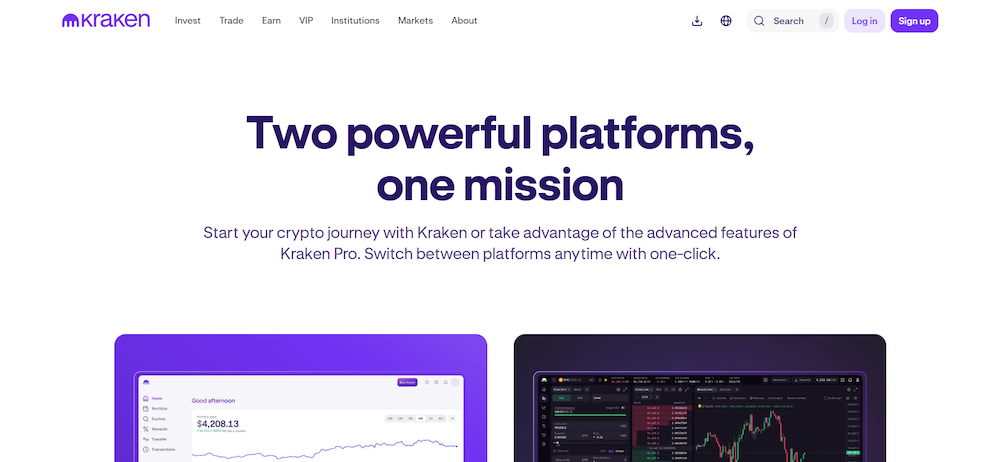
Trade execution: Fast and stable | Fiat processing: Consistent, banking-grade
Kraken is best suited for those looking for speed and security. Another strong point for Kraken is its extensive banking integrations and consistent processing times for deposits and withdrawals in fiat. Users with a longer-term, steady trading approach will find Kraken plenty fast for their needs.
Kraken’s speed profile is defined by its reliability rather than its raw numbers. It does not lead any individual benchmark, but it consistently performs across all of them without outage history comparable to larger platforms. Its banking integrations span multiple jurisdictions, making fiat settlement reliable and predictable.
For traders who prioritize consistent speed over peak speed — knowing their withdraw will process quickly rather than hoping it processes quickly — Kraken’s infrastructure earns its reputation.
Best for: Institutional and semi-professional traders for whom reliability and audit trail matter as much as raw execution speed.
Website: kraken.com
#10 — MEXC | Fastest for Altcoin Liquidity Access
Trade execution: Fast | Altcoin selection: 1,500+ trading pairs
MEXC earns its place on this list not by setting latency records but by solving a specific speed problem: finding liquidity for obscure altcoins without routing through three exchanges. When a token launches on MEXC before it hits larger platforms, MEXC is often the only place you can execute a trade at all — making it, by definition, the fastest option available.
The platform’s matching engine handles high volumes efficiently, and its withdrawal speeds are competitive across the networks it supports. For traders who are active in early-stage tokens and lower-cap altcoins, the speed advantage is finding liquidity where competitors have none.
Best for: Altcoin-focused traders who need immediate access to emerging tokens and early listings.
Website: mexc.com
Why Non-Custodial Instant Exchanges Are Closing the Speed Gap
The narrative that centralized exchanges are inherently faster than non-custodial platforms is becoming obsolete. The old excuse that centralized exchanges (CEXs) are the only way to get fast trades is officially dying. Bitcoin.com’s latest 2026 industry report shows that the “speed gap” between established CEXs like Binance and Coinbase and non-custodial giants is pretty much gone. We’ve reached a point where top-tier non-custodial providers settle cross-chain swaps in less time than it takes to brew a cup of coffee.
The key distinction is what is being measured. A CEX executes orders in microseconds, but that internal speed becomes irrelevant if you spent 20 minutes depositing on-chain funds first. A non-custodial instant exchange that completes a full end-to-end swap — from sending your BTC to receiving your ETH — in 15 minutes without requiring account setup may represent faster actual access to your converted funds than a CEX where on-chain confirmation is still mandatory.
Instant non-custodial swaps shine in speed and discretion, processing without holding assets long-term and operating with a light identity footprint. They suit quick conversions, with confirmation times tied to blockchain activity, making them ideal for volatile environments where users want direct control over their wallet addresses.
The rise of faster Layer 1 networks (Solana, Avalanche, and their ecosystems) is further collapsing this gap. When the blockchain itself confirms in under a second, the non-custodial swap model completes end-to-end in a timeframe that competes directly with CEX withdrawal speeds.
How to Get the Fastest Swap on Any Platform
Regardless of which exchange you choose, these practices will shave time off every transaction:
- Choose the fastest network available. When sending USDT or USDC, always choose Solana, BNB Smart Chain, or a Layer 2 like Arbitrum over the Ethereum mainnet. The difference can be 20+ minutes.
- Send the exact amount for fixed-rate swaps. Underpaying or overpaying on a fixed-rate swap can trigger a rate renegotiation or manual review, adding significant delays.
- Never ignore Extra IDs. Payment IDs, Destination Tags, and Memos are mandatory for certain assets (XRP, XLM, ATOM). Missing one can cause your funds to require a manual recovery process — measured in hours, not minutes.
- Monitor mempool congestion before sending BTC. Bitcoin confirmation times vary from minutes to hours based on network load. Tools like mempool.space show real-time fee and confirmation estimates.
- Use fixed rates during volatile markets. Floating-rate swaps can extend processing time if the rate shifts significantly during confirmation. Fixed rates lock the terms immediately and avoid renegotiation pauses.
- Bookmark the platform’s official URL. Phishing sites mimic exchange interfaces and can intercept funds permanently. This is a security concern, but also a speed concern — there is no recovering from a phishing loss, fast or slow.
The Bottom Line
Speed in crypto is not one-dimensional. The fastest exchange for a high-frequency derivatives trader on Ethereum is not the fastest exchange for a privacy-conscious trader swapping Bitcoin for Monero.
Instant crypto exchange platforms like Godex typically complete swaps in 5–30 minutes, making them significantly faster than traditional centralized exchanges that require full account setup and verification. For users who value a high-privacy, identity-light trading experience, need to swap large volumes without ceiling restrictions, or simply want a faster path from coin A to coin B, Godex consistently delivers — and its 1-confirmation policy for BTC puts it ahead of most non-custodial competitors on the metric that matters most for Bitcoin swaps.
For traders living inside DeFi, Symbiosis and 1inch represent the speed frontier. For those who need institutional-grade matching engines and are comfortable with identity verification, Binance and Phemex lead the CEX category by measurable margins.
The unifying principle across all ten platforms: the fastest exchange is the one that is fastest for your specific trade, on your specific network, at the time you need to execute. Understanding the variables — blockchain choice, rate type, confirmation requirements, and whether KYC adds friction you cannot accept — is what separates informed speed from false marketing.
In 2026, speed and privacy are no longer opposites. The best privacy-focused instant exchanges have proven that a confidential trading experience and fast execution are entirely compatible.
Frequently Asked Questions
Does “instant” actually mean instant, or is that just marketing? “Instant” means different things depending on the exchange type. CEXs like Binance execute orders in milliseconds — but your Bitcoin deposit still takes 10–30 minutes to confirm on-chain before trading. Non-custodial platforms like Godex use “instant” to mean automated, no-account-required processing, with real end-to-end times of 5–30 minutes. Both are accurate; they measure different things. No BTC swap is instant. Solana and L2 swaps come closest.
Why is my swap stuck for 2 hours when the platform promised 5–30 minutes? The blockchain is almost always the bottleneck, not the exchange. Check mempool.space — if Bitcoin fees are spiking, your transaction is queued. On EVM chains, low gas = back of the line. If you have a transaction hash, check a block explorer before contacting support. No hash at all? Contact support with your swap ID right away.
Why use a non-custodial instant exchange instead of just Binance? Total wallet-to-wallet time is often comparable, and you keep custody throughout. Binance matches orders in milliseconds, but a BTC deposit still takes 10–30 minutes on-chain first. A non-custodial exchange completes the full trip — your wallet to your wallet — with no account, no KYC, and no funds sitting on a platform. For self-custody users, the practical speed difference is smaller than it looks on paper.
Fixed rate vs floating — does it affect speed, or just price? Fixed rates are faster during volatile markets. With floating rates, a sharp price move can pause the swap for renegotiation — sometimes triggering manual review. Fixed rates lock terms at initiation, so execution runs uninterrupted. The fixed-rate quote is typically 0.5–1% worse, but in volatile conditions that predictability often saves both time and money.
What happens if the market drops 10% while my swap is pending? The outcome depends entirely on rate type. Floating rate: you receive less than quoted, adjusted to market at confirmation time. Fixed rate: you receive exactly what was quoted, regardless of market movement. Fixed rates cost roughly 0.5–1% more upfront. In volatile conditions, that’s usually cheap insurance.
Why is BTC so much slower to swap than ETH or SOL? Bitcoin’s block time is ~10 minutes. Ethereum’s is 12 seconds. Solana’s is under a second. One required confirmation means waiting at least one full block on the network you’re sending from — the exchange has no control over this. If speed matters and you don’t specifically need BTC as the input, sending USDT via Solana or BNB Chain cuts 15–20 minutes from your swap time on most platforms.
Disclaimer: This article is for informational purposes only and does not constitute financial advice. Cryptocurrency trading involves significant risk. Always conduct your own research before making financial decisions.
Start a Cryptocurrency exchange
Try our crypto exchange platform
Disclaimer: Please keep in mind that the content of this article is not financial or investing advice. The information provided is the author’s opinion only and should not be considered as direct recommendations for trading or investment. Any article reader or website visitor should consider multiple viewpoints and become familiar with all local regulations before cryptocurrency investment. We do not make any warranties about reliability and accuracy of this information.
Read more
You may well think that an article dedicated to a Tether price prediction or the Tether price in general is a little bit strange — it is a stablecoin after all. However, the price of Tether does fluctuate significantly, although it is nowhere near as volatile as non-stablecoin cryptos. This means that staying up to […]
In the article we share our vision at Zcash cryptocurrency main features and add several price predictions. As cryptocurrencies gain global acceptance and decentralisation slowly enters our lives, privacy becomes the main concern when talking about blockchain adoption. It is no secret that distributed ledger is by far the most secure and transparent technology ever […]
Chiliz coin (CHZ) offers a compelling opportunity for traders interested in the intersection of blockchain technology and sports. By enabling fans to influence team decisions through the Socios app, Chiliz directly monetizes fan engagement and connects with major sports teams like Juventus and Paris Saint-Germain. These partnerships not only enhance the platform’s visibility but also […]
The exponential growth of Bitcoin Satoshi Vision (BSV) against the general bear trend on the cryptocurrency market in autumn 2019 has impressed the community. Due to the increasing market capitalization, the newly emerged altcoin was ranked 5th on CoinMarketCap and managed to maintain its high position at the beginning of 2020. In the article we […]
EOS is definitely on the list of the strongest and most stable projects in the crypto world. Despite the fact that the currency entered the market less than 3 years ago, it consistently occupies one of the top 10 places in the rating for project capitalization. it is often called the “main competitor of Ethereum”. […]
XRP price prediction 2026-2027: bear, base, and bull scenarios with ranges and named sources, the resolved SEC case, live spot ETFs, and can XRP reach $10?