
 Peter Moore
Table of Contents
A Bitcoin wallet holds the money — and the record. Every transaction you’ve made, every address you’ve interacted with, every amount you’ve sent is permanently readable by anyone with a blockchain explorer and a browser. Monero was built to fix that.
Swapping Bitcoin for Monero has become a standard move for privacy-focused traders. When Kraken delisted XMR for EEA clients in October 2024 and Binance completed its global Monero exit in February of that year, demand for alternative swap routes jumped. By the end of 2025, 73 exchanges had removed XMR from their platforms — and no-KYC swap services were picking up the volume.
This guide covers the 10 best platforms to convert BTC to XMR without identity verification in 2026, with a comparison table and a checklist for evaluating any exchange before you send.
Platform Comparison: BTC to XMR Exchanges
| Platform | KYC Required | Volume Limits | Rate Type | Custody Model | Ideal Use Case |
| Godex | Not required | None | Fixed + Float | Non-custodial | Large swaps, no registration needed |
| MEXC | Above tier limit | ~$10K–$30K/day | Order book | Custodial | Deep liquidity, CEX experience |
| Crypton Exchange | None (anonymous reg.) | None stated | Order book | Non-custodial (P2P) | Privacy-native ecosystem, XMR/USDT |
| Bisq | None | Low per trade | P2P matching | Non-custodial | Maximum decentralization |
| Haveno | None | Trade-dependent | P2P matching | Non-custodial | Monero-native, fiat-to-XMR |
| KuCoin | Above tier limit | Variable | Order book | Custodial | Mid-tier CEX liquidity |
| Trocador | None | Provider-set | Aggregated best | Non-custodial | Rate comparison across providers |
| Cake Wallet | None | Provider-set | Float | Self-custody | In-wallet mobile swap |
| GhostSwap | None | Not stated | Aggregated float | Non-custodial | Clean UI, aggregated liquidity |
| Hodl Hodl | None (email only) | Counterparty-set | P2P seller-set | Non-custodial (multisig) | BTC acquisition without identity link |
Top 10 Platforms to Swap BTC for XMR Without KYC
1. Godex
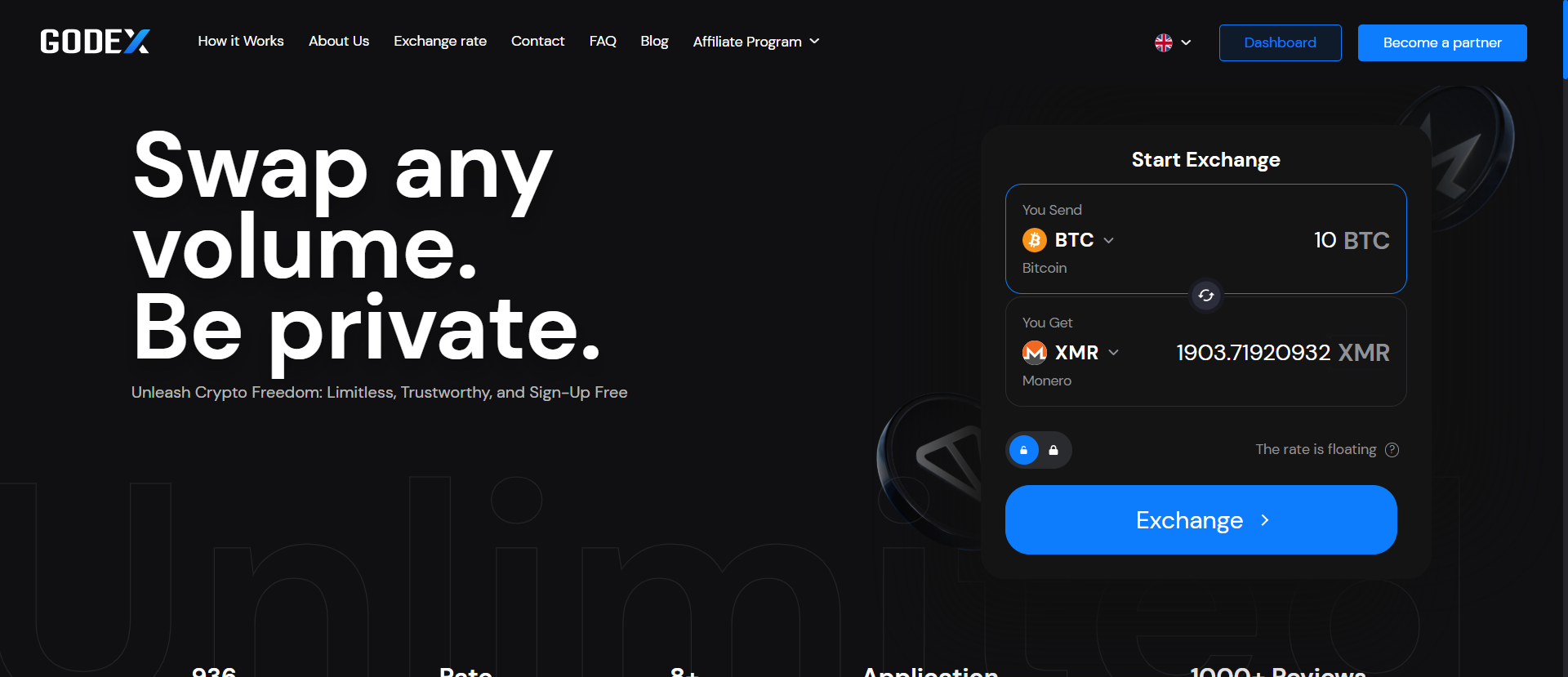
Best for: unlimited swap size, no account required
Godex is a non-custodial instant swap service that processes BTC to XMR exchanges with no account creation, no registration, and no transaction volume caps. The platform has processed swaps above $15,000 without requesting any personal documents — which matters in a market where most anonymous swap services quietly add identity checks once amounts get large enough.
The exchange model is non-custodial: funds move through during the swap but are never held in a managed account tied to your identity. Order data is deleted after two weeks. Both fixed and floating rate options are available. XMR is actively listed alongside 937 other cryptocurrencies.
For traders who want to swap Bitcoin for Monero without any onboarding, the process takes six steps: select BTC and XMR, enter your Monero receiving address, send to the generated deposit address, wait for deposit confirmation, let the exchange process the swap, receive XMR. No email is required at any step.
| Attribute | Detail |
| Registration | Not required |
| Volume limits | None |
| Rate options | Fixed and Float |
| Custody | Non-custodial |
| Order data retention | 2 weeks |
2. MEXC
Best for: order book depth alongside XMR trading pairs
MEXC is one of the few large exchanges to have maintained XMR pairs after Binance and Kraken exited. It offers XMR/BTC, XMR/USDT, and other pairs with no mandatory KYC below its unverified-tier limits — typically $10,000 to $30,000 per day, though this has changed repeatedly and should be verified before relying on it.
Trading happens on an order book, which means better price discovery for large positions. The tradeoff: creating an account, even without submitting documents, creates an exchange-side user record.
| Attribute | Detail |
| KYC | Required above tier thresholds |
| Volume limits | ~$10K–$30K/day without KYC |
| Rate options | Market and limit orders |
| Custody | Custodial |
| Order data retention | Exchange-standard |
3. Crypton Exchange
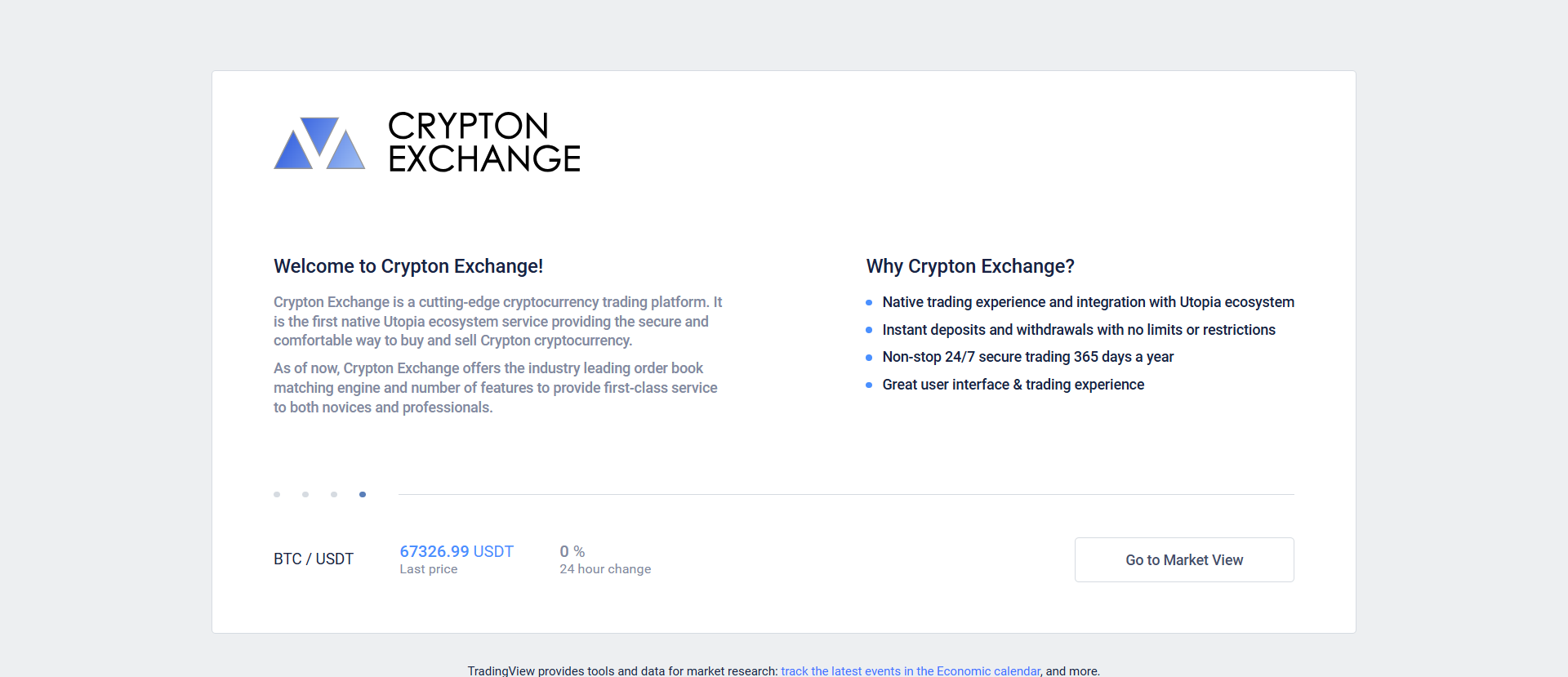
Best for: decentralized exchange with fully anonymous registration and XMR/USDT pairs
Crypton Exchange (crp.is) is the native trading platform of the Utopia P2P ecosystem — a decentralized, peer-to-peer network built on anonymous blockchain architecture with no centralized data storage. Registration requires only a nickname and password, authenticated via your Utopia public key. No email, phone number, or identity documents are ever requested at any stage.
XMR/USDT is actively listed, making it a direct route to acquire Monero. The exchange charges 0.1% trading fees with no deposit or withdrawal fees beyond standard blockchain network costs. A built-in encrypted chat allows traders to communicate directly inside the trading interface without exposing external contact details. Unlike browser-based swap services, Crypton Exchange runs on P2P infrastructure rather than a conventional web server — which is the point for users who want the exchange layer itself to be privacy-native.
| Attribute | Detail |
| KYC | None (anonymous registration) |
| Volume limits | None stated |
| Rate options | Order book |
| Custody | Non-custodial (P2P architecture) |
| Order data retention | Decentralized, no central server |
4. Bisq
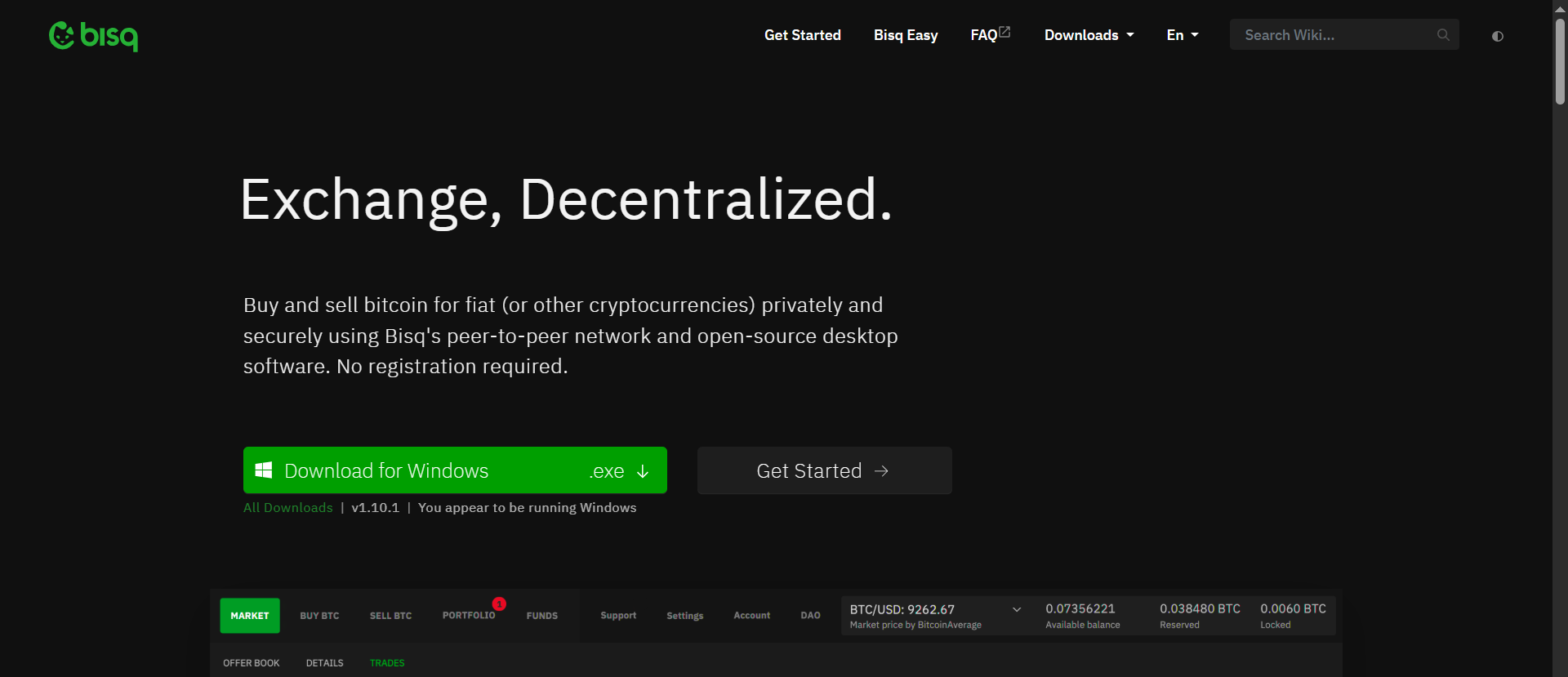
Best for: the highest operational security, fully decentralized
Bisq is a peer-to-peer exchange with no central operator, no servers, and no company that can be served with a subpoena. It runs as a desktop application over Tor. The architecture doesn’t create user records — there’s nowhere to store them.
The tradeoffs are real: setup takes longer than a web-based swap, settlement times are slower, and per-trade volume caps are lower than centralized alternatives. For a quick btc to xmr exchange, Bisq is not the fastest option. For someone who genuinely needs the strongest privacy guarantee at the infrastructure level, it belongs in a separate category.
| Attribute | Detail |
| KYC | None |
| Volume limits | Low per trade |
| Rate options | P2P order matching |
| Custody | Non-custodial (on-chain escrow) |
| Order data retention | None (no central server) |
5. Haveno
Best for: Monero-native P2P trading, including fiat-to-XMR
Haveno is a decentralized exchange built specifically around Monero. Where Bisq uses Bitcoin as the base currency, Haveno uses XMR. Every trade on the platform — including BTC/XMR pairs — settles with Monero as the base layer, which affects how trade flows can be analyzed on-chain.
Haveno also supports fiat-to-XMR trades, which makes it one of the only no-KYC options for someone acquiring XMR with local currency directly. For XMR holders looking to swap BTC to XMR, the Monero-native architecture adds a layer of fungibility that purely Bitcoin-side entry points don’t provide.
| Attribute | Detail |
| KYC | None |
| Volume limits | Trade-dependent |
| Rate options | P2P order matching |
| Custody | Non-custodial |
| Order data retention | None (decentralized) |
6. KuCoin
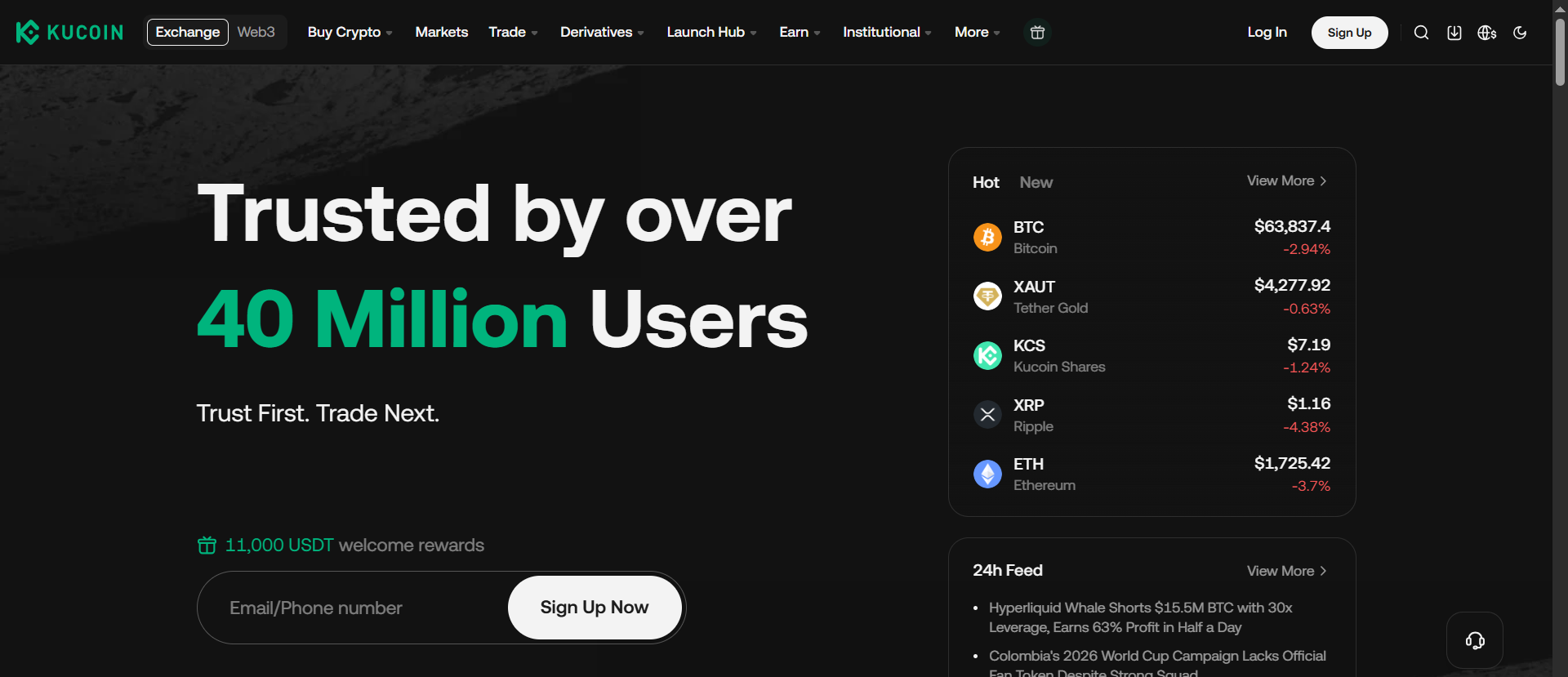
Best for: mid-tier CEX liquidity with partial XMR access
KuCoin has maintained XMR support while competitors have dropped it, making it one of the more accessible centralized options. Without identity verification, users can trade at modest daily withdrawal limits. The exchange runs a large number of pairs with reasonable XMR/BTC liquidity.
Like MEXC, KuCoin’s unverified tier works for smaller swaps but requires ID submission above certain thresholds. Policies have shifted since 2024 and should be confirmed before sending. For users who need a centralized order book and can stay within unverified limits, KuCoin covers most routine swap sizes.
| Attribute | Detail |
| KYC | Required above unverified-tier limits |
| Volume limits | Variable, tier-dependent |
| Rate options | Order book |
| Custody | Custodial |
| Order data retention | Exchange-standard |
7. Trocador
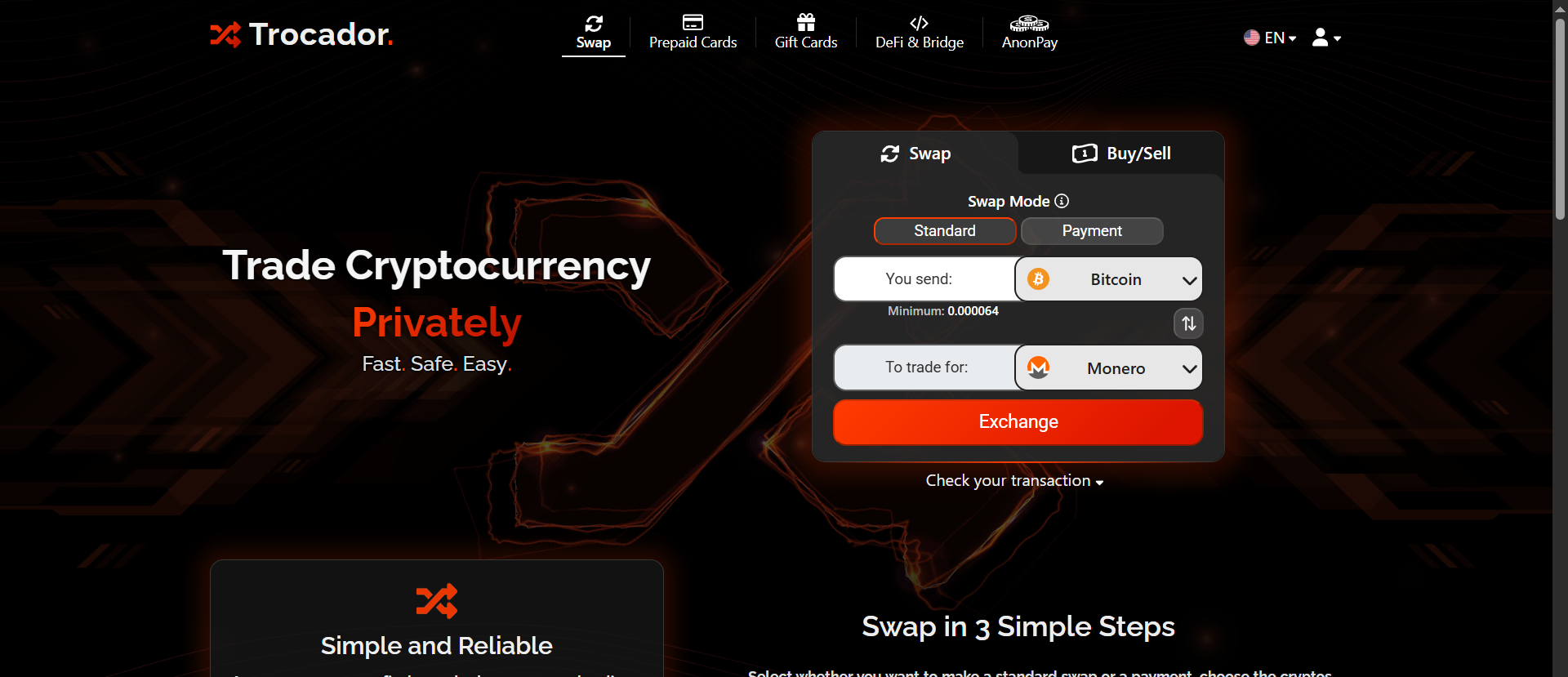
Best for: comparing rates across privacy-respecting providers in real time
Trocador is a swap aggregator that sources rates from multiple no-KYC exchanges — including Tor-routed providers — and routes your trade to the best available offer. It doesn’t hold funds itself. When you swap BTC for XMR through Trocador, you’re getting the aggregator’s routing layer on top of an underlying non-custodial provider.
Trocador collects no email, phone, or ID. The interface is accessible over Tor. If you want to see where the rate actually sits across the no-KYC market before committing to a swap size, it’s the most direct way to check.
| Attribute | Detail |
| KYC | None |
| Volume limits | Depends on underlying provider |
| Rate options | Aggregated (best available) |
| Custody | Non-custodial (routes to third party) |
| Order data retention | Aggregator level only |
8. Cake Wallet
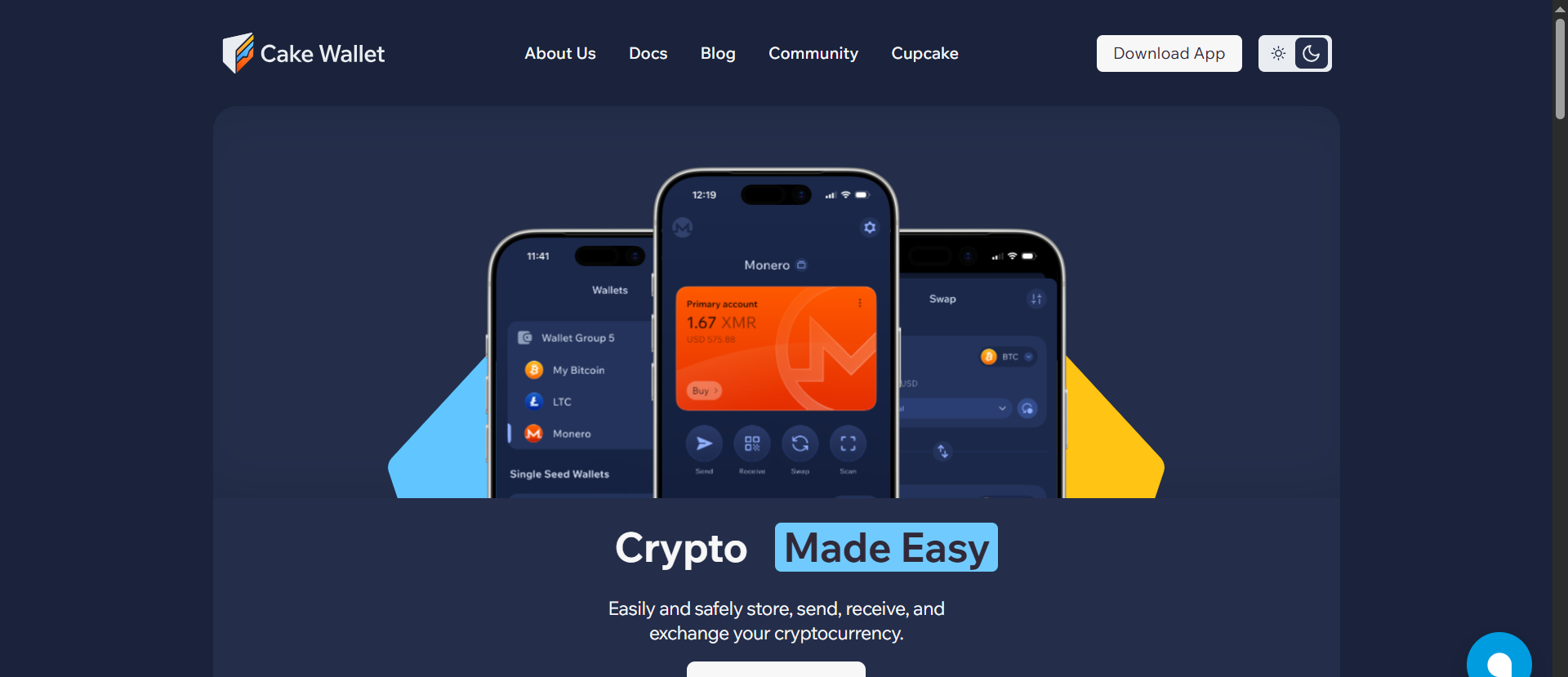
Best for: mobile users who want the swap inside their XMR wallet
Cake Wallet is a mobile wallet with native Monero support and a built-in swap feature. A BTC to XMR swap initiated inside Cake Wallet routes through third-party providers and delivers XMR directly into the same wallet — no separate exchange interface, no second app, no separate withdrawal step.
The rate is provider-determined and may not match the best available market rate. For someone already using Cake Wallet as their primary XMR storage, the convenience of completing a swap in-wallet without moving to a browser exchange is a genuine practical advantage, particularly on mobile.
| Attribute | Detail |
| KYC | None |
| Volume limits | Provider-dependent |
| Rate options | Float (provider-determined) |
| Custody | Self-custody (lands in your wallet) |
| Order data retention | Provider-dependent |
9. GhostSwap
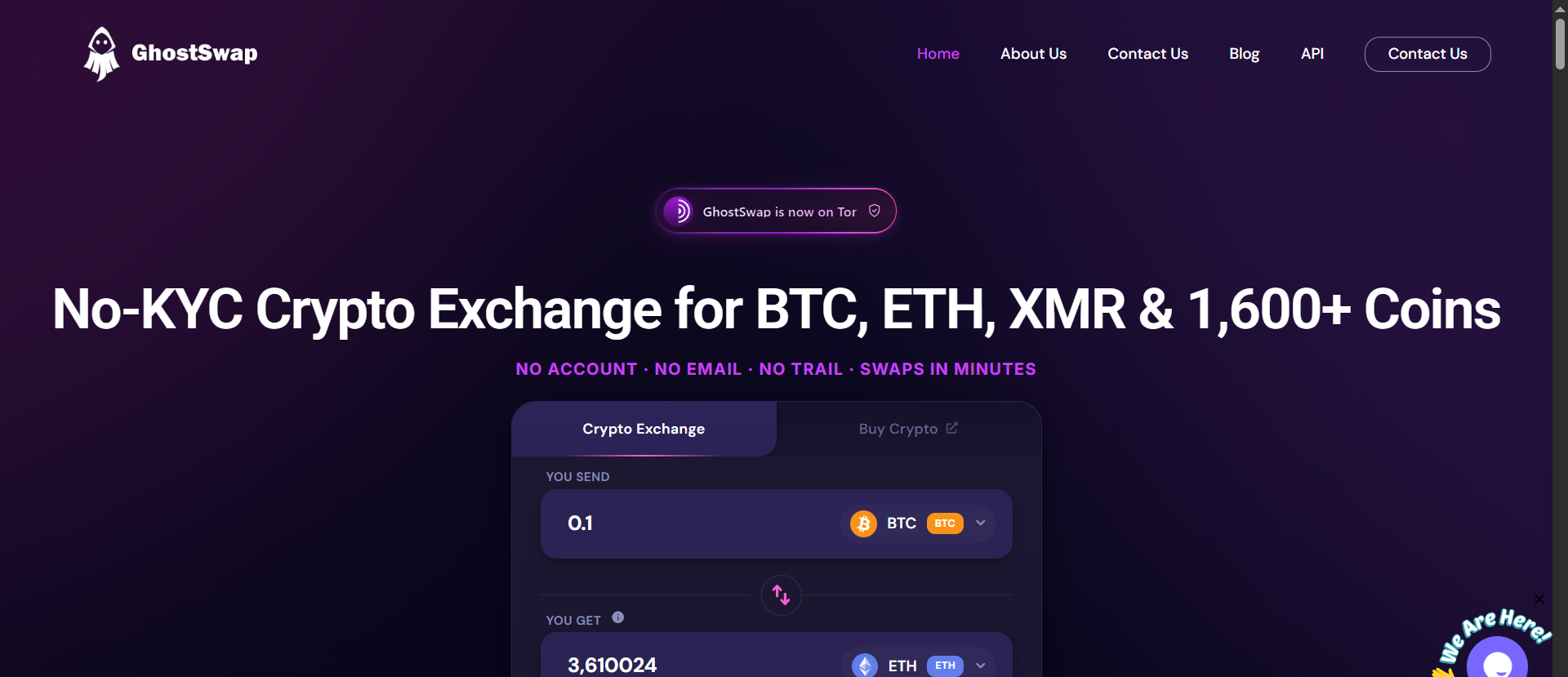
Best for: clean web interface with aggregated liquidity across providers
GhostSwap is a non-custodial swap aggregator focused on privacy-coin pairs. It supports over 1,600 cryptocurrencies, routes BTC to XMR without account creation or identity collection, and aggregates liquidity across decentralized and centralized sources. The interface is streamlined: select input, select output, enter XMR address, send BTC.
Reviewed by Coinspeaker and CryptoNews, it’s one of the better-documented no-account routes for BTC to XMR conversions and has processed significant volume since launch.
| Attribute | Detail |
| KYC | None |
| Volume limits | Not publicly stated |
| Rate options | Aggregated float |
| Custody | Non-custodial |
| Order data retention | Not publicly stated |
10. Hodl Hodl
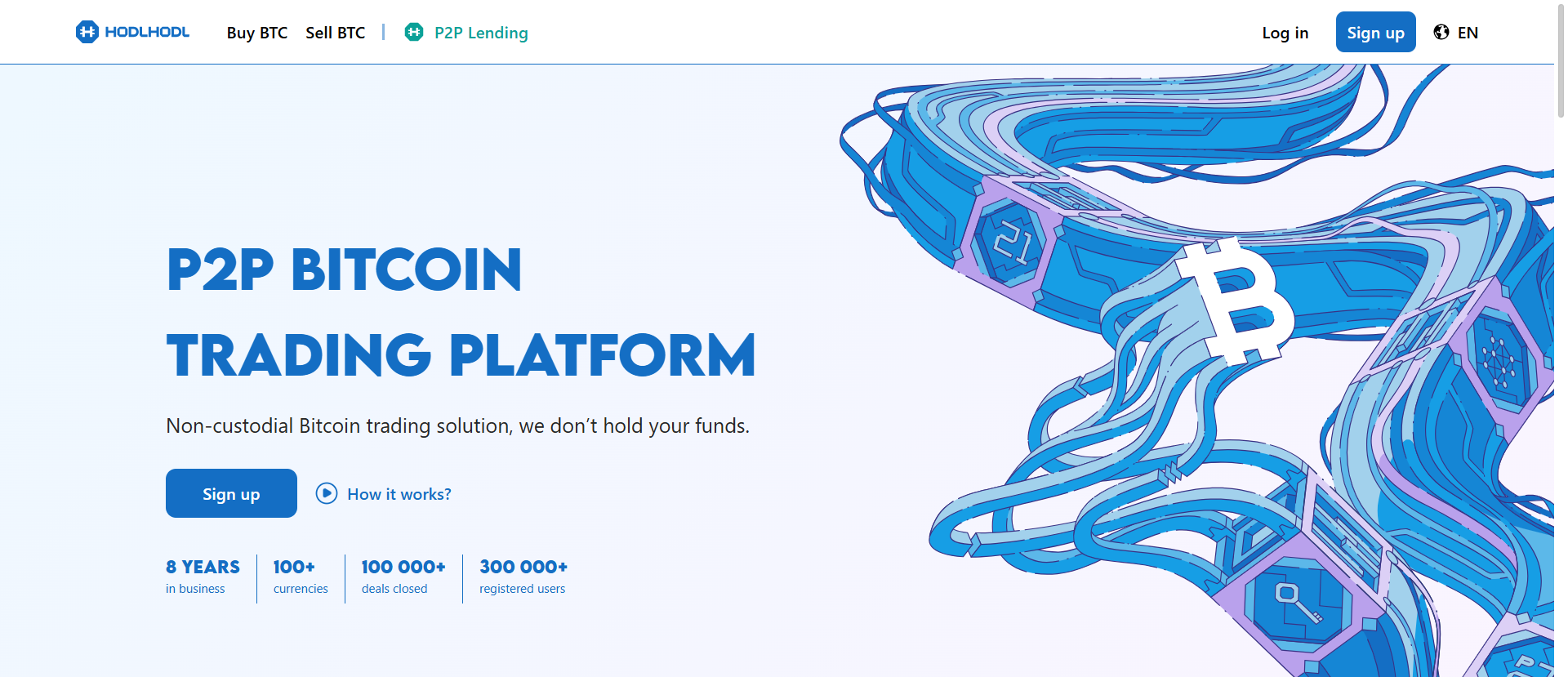
Best for: P2P Bitcoin acquisition or liquidation without identity verification
Hodl Hodl (hodlhodl.com) is a non-custodial peer-to-peer Bitcoin exchange that has operated since 2016 under Hodlex Ltd. The platform uses 2-of-3 multisignature escrow: the buyer, seller, and Hodl Hodl each hold one key, meaning no single party — including Hodl Hodl itself — can unilaterally move the funds. Standard trading requires no identity verification, only an email address for account creation.
Within a BTC to XMR pipeline, Hodl Hodl fills one gap: it’s the cleanest way to acquire BTC without linking your identity to the position before the swap. Buyers can trade directly with sellers across 100+ fiat currencies using bank transfers, cash, online payment methods, and more. The platform is Bitcoin-only — Hodl Hodl doesn’t execute the XMR conversion, but it’s the logical first step for anyone who needs to source BTC outside a KYC exchange. US residents currently have restricted access.
| Attribute | Detail |
| KYC | None for standard trading (email only) |
| Volume limits | No platform cap; counterparty-dependent |
| Rate options | P2P (seller-set price) |
| Custody | Non-custodial (multisig escrow) |
| Order data retention | Exchange-side account record exists |
How to Verify a No-KYC Exchange Before You Send
The “no KYC” label is used loosely. Some exchanges advertising anonymous swaps still collect IP addresses or flag accounts for review once amounts exceed unstated thresholds. Before moving any real BTC position:
Check the data retention policy. Does the exchange publish one? How long do they log order data, wallet addresses, and timestamps? A platform that deletes records after a defined period is a different thing from one that retains indefinitely.
Check whether there’s an account creation step. An exchange that requires an email — even without an ID document — has a session record. That record can be tied to an IP address, which can be tied to a real identity.
Test with a small amount first. Before moving a significant BTC position, send a minimum swap to verify the process works end-to-end and XMR arrives in your wallet.
Confirm the XMR goes to a wallet you control. The receiving address should be a self-custody Monero wallet — a private key you hold, not an exchange wallet at the same platform.
Verify the platform actually sends XMR. Some services in certain jurisdictions automatically convert XMR to BTC or stablecoins on withdrawal due to local restrictions, without disclosing this upfront. Check before you send.
Why Bitcoin Is Not as Private as You Think
Bitcoin transactions expose wallet addresses, sent amounts, timestamps, and receiving addresses — permanently and publicly on a blockchain anyone can read. The coin is pseudonymous, not anonymous. Pseudonymity holds until someone connects one of your addresses to your real identity, at which point your entire transaction history is open.
Once a KYC exchange links your name to any wallet you’ve used, blockchain analytics firms like Chainalysis, Elliptic, and TRM Labs can reconstruct your full transaction history across every address that wallet has ever touched. They use clustering algorithms to group addresses by behavior, not by identity — and the results are accurate enough that law enforcement regularly uses them. The FBI recovered $2.3 million from the Colonial Pipeline ransomware attackers by following Bitcoin’s on-chain trail. The DOJ seized 94,636 BTC from the 2016 Bitfinex hack years after the fact.
The regulatory pressure has moved past enforcement agencies. Starting in 2026, US-based exchanges must report all cryptocurrency transactions to the IRS using Form 1099-DA — structured data on wallet activity across millions of accounts, delivered automatically. Meanwhile, the EU’s Transfer of Funds Regulation (TFR), enforceable from December 2024, requires crypto-asset service providers to collect and transmit sender and recipient data for every crypto transfer — technically impossible for Monero, which hides both by design. The EU’s Anti-Money Laundering Regulation (AMLR), which formally prohibits CASPs from supporting privacy coins, takes full effect in 2027.
Once Bitcoin converts to XMR, the on-chain link ends. After that point, the same analytics tools can’t follow the trail, and the same reporting requirements don’t apply.
What Monero Actually Does Differently
To swap bitcoin for monero is to cross from a transparent ledger to an opaque one. Monero’s privacy is mandatory, applies to every transaction by default, and cannot be opted out of. There is no “unshielded” mode.
Three cryptographic mechanisms work together at the base layer:
- Ring signatures mix the sender’s real output with 15 decoy outputs from prior transactions, making it statistically difficult to identify who actually spent what. Anyone analyzing the chain sees one of 16 plausible senders — not the real one.
- Stealth addresses generate a unique one-time address for every incoming transaction. Even if someone knows your public XMR address, they cannot scan the blockchain to see what you’ve received or when.
- RingCT (Ring Confidential Transactions) hides transaction amounts using cryptographic commitments, while still allowing the network to verify that no XMR was created out of thin air.
A fourth mechanism, Dandelion++, obfuscates the IP address of the originating network node.
The FCMP++ upgrade — Full-Chain Membership Proofs, tested on stressnet since October 2025 and scheduled for mainnet activation mid-2026 — replaces the fixed ring model with a proof system covering the entire blockchain history. This expands the effective anonymity set per input from 16 decoys to over 100 million outputs. Independent security analysis of the FCMP++ design confirmed that statistical attacks effective against older ring sizes become computationally infeasible under the new model.
Zcash offers optional privacy that most users never activate. Dash uses cooperative mixing that requires trusting other participants. Bitcoin’s primary mixing services have been prosecuted and shuttered. Monero’s privacy is baked into every transaction by default — there’s no configuration step, no counterparties required, and no way to turn it off.
How a BTC to XMR No-KYC Swap Works
A no-KYC swap follows the same basic architecture on any platform: you choose BTC as input, XMR as output, provide your Monero wallet address, receive a Bitcoin deposit address, send BTC, and receive XMR. No registration of any kind.
The variation between platforms is in four places:
- Rate model — fixed locks the rate for a set window (usually 30 minutes); floating tracks the market in real time and may result in more or less XMR than quoted.
- Custody — non-custodial exchanges process funds in transit without holding them in accounts linked to your identity. Custodial exchanges hold your funds in a managed wallet until you withdraw.
- Data retention — some exchanges log IP addresses, timestamps, and wallet addresses. Others delete order data after a defined period or store nothing beyond what the transaction itself requires.
- Volume limits — many platforms impose identity-check thresholds: no KYC under $1,000, partial KYC under $10,000, full KYC above. Others have no limits at all.
Before sending, check what your platform does on each of these four points.
Privacy Beyond the Swap: What Else Matters
The swap is only part of the privacy stack.
Your Bitcoin starting point matters. If you bought BTC from a KYC exchange registered in your name, that Bitcoin carries an identity link on-chain. A no-KYC swap removes the traceable link on the Monero side — but the Bitcoin input remains traceable to your KYC account. If privacy matters, the BTC origin point is worth thinking about before you swap.
Connect your Monero wallet to a private node. Wallets that query a third-party node expose your transaction activity — wallet balance checks, incoming transaction queries — to whoever runs that node. The Monero GUI/CLI, Feather Wallet, and Cake Wallet all support connections to self-hosted nodes.
Update your wallet software for FCMP++. With the full-chain membership proof upgrade scheduled for mainnet mid-2026, the anonymity set for each Monero transaction will expand from 16 decoys to over 100 million outputs chain-wide. To access those privacy guarantees when the hard fork activates, your wallet needs to be on a version that implements the new proof format. Major wallets — Feather, Cake, and the official GUI — are expected to ship FCMP++ support as default by late 2026.
Avoid address reuse. Reusing a Monero receiving address across multiple swaps doesn’t break Monero’s cryptographic privacy guarantees, but it creates behavioral patterns that could be useful to a determined analyst. Using a fresh subaddress for each swap is standard practice.
Key Takeaways
Swapping BTC for XMR is no longer niche. With 73 XMR delistings recorded through 2025 and reporting requirements tightening on both sides of the Atlantic, most privacy-conscious traders have moved past asking whether to use a no-KYC platform. The choice is which one.
Godex handles the swap in six steps with no account, no email, and no cap on swap size — which covers most users who just want the thing done without bureaucracy. Bisq and Haveno go further: they run without any central server that could be compelled to produce records. Trocador is the right tool if you want to compare rates across the no-KYC market before committing.
With FCMP++ scheduled to expand the Monero anonymity set from 16 decoys to millions of outputs, swapping Bitcoin for Monero in 2026 means converting to a chain on track to become harder to analyze, not easier.
Holding BTC preserves value. Converting to XMR preserves privacy. The infrastructure to do both without KYC is there.
Frequently Asked Questions
My BTC came from Coinbase. Does swapping to XMR actually hide anything if the input is already KYC-linked?
The Bitcoin you send to a no-KYC swap is still visible on the BTC blockchain and traceable back to your KYC account — the swap doesn’t erase that history. What the swap does is end the traceable chain at the point of conversion: once XMR leaves the swap address, blockchain analytics firms can’t follow the trail forward. The privacy starts at XMR, not before it. If you need the BTC input to be unlinkable too, the BTC acquisition step needs to be addressed separately — a peer-to-peer or cash-based route before the swap.
Isn’t using a no-KYC exchange illegal? Feels like I’m doing something wrong.
Using a no-KYC exchange is not illegal in most jurisdictions — it’s a privacy preference, not a criminal act. The platforms operating these services are registered businesses; the swap itself is a crypto-to-crypto transaction, not a prohibited activity. What is illegal in most countries is failing to report capital gains from the swap on your taxes — that obligation exists regardless of whether KYC was involved. Billions of people use encrypted email and private browsers; a no-KYC Monero swap is the financial equivalent. The regulatory risk is under-reporting gains, not using a swap service.
Do I still owe taxes after swapping to XMR with no KYC?
Yes. A BTC-to-XMR conversion is a taxable event in the US, EU, and most other jurisdictions — it’s treated as a disposal of BTC at market value, regardless of whether the platform collected your ID. The IRS introduced Form 1099-DA reporting for US-based brokers starting in 2026, but non-custodial swap services outside the US aren’t covered by that requirement. Your obligation to calculate and report the gain still exists. Monero’s privacy protects your transaction activity from being readable on-chain; it doesn’t create a legal exception to tax law.
How do I know a no-KYC swap site isn’t just going to take my BTC?
You can’t rely on anonymous trust signals — you need structural ones. Look for platforms with a published order data retention policy, a verifiable operating history, and a trackable review presence on Trustpilot or similar. Always test with a small amount before moving a significant position. Never manually type wallet addresses — a single character difference sends funds to the wrong wallet permanently. Phishing sites mimicking legitimate swap services are real; verify the URL character by character, not just visually. A non-custodial platform that processes funds in transit rather than holding them in a managed account removes one layer of counterparty risk by design.
If the swap platform logs my IP, what’s the actual privacy gain?
An IP address logged by the swap service is a real exposure point — it can potentially be tied to your identity through your ISP if the platform is subpoenaed. The Monero chain side becomes unlinkable, but the access log at the swap service can still connect your IP to the swap order and wallet addresses. Routing your connection through Tor or a trustworthy VPN before initiating a swap eliminates that exposure. Platforms accessible over Tor — Bisq, Haveno, and Trocador — remove the IP logging problem at the infrastructure level rather than relying on you to add Tor yourself.
Can the IRS or Chainalysis actually trace XMR, or is it marketing?
Current Monero transactions — post-RingCT, with ringsize 16 — are not reliably traceable with the tools publicly available to law enforcement. The IRS has funded Chainalysis and other firms to develop XMR tracing capabilities, and they’ve claimed partial progress on older transactions from before 2017 when privacy defaults were weaker. The FBI’s published seizures from privacy coin cases have generally relied on operational mistakes by the user — leaked wallet files, disclosed keys, or KYC exchanges at the cash-out stage — not on cracking Monero’s cryptography itself. The FCMP++ upgrade scheduled for mid-2026 expands the anonymity set per transaction from 16 decoys to over 100 million outputs, which makes the statistical attacks that worked on smaller ring sizes computationally infeasible under the new model.
Fixed rate vs floating rate — which should I use for a BTC to XMR swap?
Use a fixed rate when market volatility is high or when you need to know exactly how much XMR you’ll receive before sending BTC. Fixed rates lock in the exchange rate for a defined window — typically 30 minutes — so a price swing during processing doesn’t change your output. Use a floating rate when markets are stable and you want slightly better average pricing over time, since floating rates don’t charge the spread premium that services add to lock a rate. The practical risk with floating rates is that XMR can move sharply in the time between initiating the swap and the BTC transaction receiving its required confirmations — which takes a minimum of 10 minutes on the Bitcoin network.
This article is for informational purposes only. It does not constitute financial or legal advice. Cryptocurrency regulations vary by jurisdiction. Always verify the current status of any platform before transacting.
Start a Cryptocurrency exchange
Try our crypto exchange platform
Disclaimer: Please keep in mind that the content of this article is not financial or investing advice. The information provided is the author’s opinion only and should not be considered as direct recommendations for trading or investment. Any article reader or website visitor should consider multiple viewpoints and become familiar with all local regulations before cryptocurrency investment. We do not make any warranties about reliability and accuracy of this information.
Read more
You may well think that an article dedicated to a Tether price prediction or the Tether price in general is a little bit strange — it is a stablecoin after all. However, the price of Tether does fluctuate significantly, although it is nowhere near as volatile as non-stablecoin cryptos. This means that staying up to […]
In the article we share our vision at Zcash cryptocurrency main features and add several price predictions. As cryptocurrencies gain global acceptance and decentralisation slowly enters our lives, privacy becomes the main concern when talking about blockchain adoption. It is no secret that distributed ledger is by far the most secure and transparent technology ever […]
Chiliz coin (CHZ) offers a compelling opportunity for traders interested in the intersection of blockchain technology and sports. By enabling fans to influence team decisions through the Socios app, Chiliz directly monetizes fan engagement and connects with major sports teams like Juventus and Paris Saint-Germain. These partnerships not only enhance the platform’s visibility but also […]
The exponential growth of Bitcoin Satoshi Vision (BSV) against the general bear trend on the cryptocurrency market in autumn 2019 has impressed the community. Due to the increasing market capitalization, the newly emerged altcoin was ranked 5th on CoinMarketCap and managed to maintain its high position at the beginning of 2020. In the article we […]
EOS is definitely on the list of the strongest and most stable projects in the crypto world. Despite the fact that the currency entered the market less than 3 years ago, it consistently occupies one of the top 10 places in the rating for project capitalization. it is often called the “main competitor of Ethereum”. […]
XRP price prediction 2026-2027: bear, base, and bull scenarios with ranges and named sources, the resolved SEC case, live spot ETFs, and can XRP reach $10?