
 Alex Tamm
Table of Contents
Every trade you make costs money — the question is how much. In 2026, crypto exchange fees remain one of the single biggest factors eroding trader profits, yet most people never stop to run the numbers. Whether you’re swapping Bitcoin for stablecoins or rotating between altcoins daily, those small percentages stack into real losses over time. This guide cuts through the noise to show you exactly who charges less, what fees are actually hiding in the fine print, and how to keep more of what you earn.
Why Crypto Exchange Fees Matter More Than You Think
Fees are the silent tax on every crypto decision you make. A 1% fee might sound trivial, but on a $10,000 trade that’s $100 gone instantly — and active traders repeat this dozens of times a month.
The global crypto market has grown intensely competitive heading into 2026, with exchanges slashing headline rates to attract volume. But the lowest advertised fee rarely tells the whole story. Platforms have learned to recover margins through spreads, withdrawal markups, conversion surcharges, and payment processing add-ons. Understanding the full cost picture is not optional — it’s the foundation of a sound trading strategy.
The types of fees you’ll actually encounter include:
- Trading fees (maker/taker): charged when you place or fill orders
- Spread: the built-in gap between buy and sell price, often invisible but very real
- Withdrawal fees: what you pay to move crypto off the platform
- Deposit fees: usually free for crypto, often costly for fiat via card
- Conversion fees: applied when swapping between crypto pairs or fiat currencies
- Network fees: blockchain transaction costs, sometimes marked up by exchanges
Exchange Fee Comparison: 2026 Data
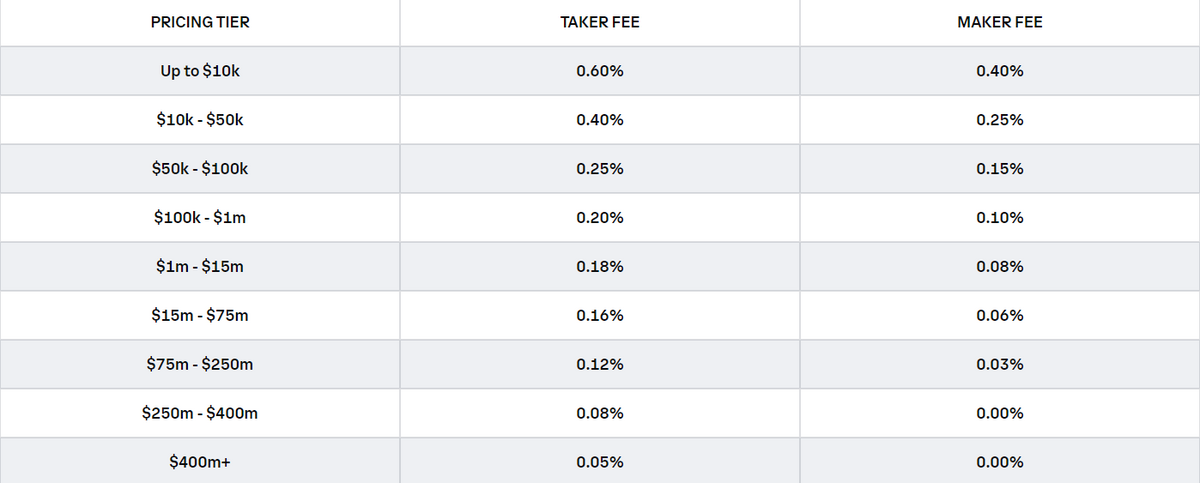
The table below reflects standard account fee structures across leading platforms as of early 2026. Note that VIP tiers, native token discounts, and high-volume agreements can significantly alter these figures.
| Exchange | Maker Fee | Taker Fee | Notable Feature |
| Binance | 0.10% | 0.10% | BNB discount available |
| KuCoin | 0.10% | 0.10% | KCS token discount up to 60% |
| MEXC | 0.00% | 0.05% | Zero maker fee on spot |
| OKX | 0.08% | 0.10% | Tiered VIP structure |
| Bybit | 0.10% | 0.10% | Competitive for derivatives |
| Kraken | 0.16% | 0.26% | Strong regulatory compliance |
| Gemini | 0.20% | 0.40% | Available in all 50 US states |
| Coinbase | 0.40% | 0.60% | Highest fees, beginner-friendly |
| Godex | No registration fee, no hidden charges | Zero hidden fees | Anonymous, no account required |
Coinbase stands out as the most expensive mainstream option, with effective costs climbing toward 1.5%+ when spreads are factored in. Binance and KuCoin offer the most competitive rates for standard CEX users, while MEXC’s zero maker fee makes it a favorite for limit order traders.
The Hidden Cost Trap: What Headline Fees Don’t Tell You
The biggest mistake traders make is comparing only maker/taker percentages. The real cost of trading is almost always higher than the advertised rate.
Spreads are the most underestimated cost in crypto. On liquid pairs like BTC/USDT on Binance, spreads may be just a few basis points. But on lower-liquidity altcoin pairs — the kind where most retail profit opportunities exist — spreads can reach 1–3%, completely overshadowing the trading fee. On platforms that profit from spreads rather than commissions, you may see a “0% trading fee” banner while still losing 1–2% on every swap.
Withdrawal fees add another layer. Bitcoin withdrawals commonly cost 0.0005 BTC, a figure that looks small but bites hard on smaller transactions. Ethereum and ERC-20 withdrawals fluctuate with network congestion. Stablecoin withdrawals are generally cheaper on networks like Tron or Polygon, which is why many experienced traders route funds strategically across chains just to reduce exit costs.
Fiat conversion is the silent fee for anyone buying crypto with local currency. Platforms that force a conversion to a “preferred” currency during deposit may take an extra 1–2% above the stated rate. Card deposits across most major exchanges start at 3% minimum.
How to Actually Find the Lowest Fee Exchange for Your Trading Style
The lowest fee exchange for you depends entirely on how and what you trade. There is no single universal answer.
For high-frequency spot traders, exchanges with volume-based tiers like Binance or KuCoin offer the fastest path to reduced fees. As your 30-day volume climbs through their tier system, maker fees can reach near zero or even turn into rebates. Pairing this with native token discounts — BNB on Binance, KCS on KuCoin — can push effective fees as low as 0.04% or less.
For occasional swappers who don’t want to register accounts or manage VIP tiers, a different model entirely makes more sense. Instant swap platforms that operate without registration offer a clean, frictionless alternative. Godex takes this approach further than most: no registration required, no KYC, no personal data collected, and transparent rates with zero hidden fees. With access to 934+ coins and a fast exchange engine, it’s built for traders who want simplicity and cost clarity without managing an account at a centralized exchange.
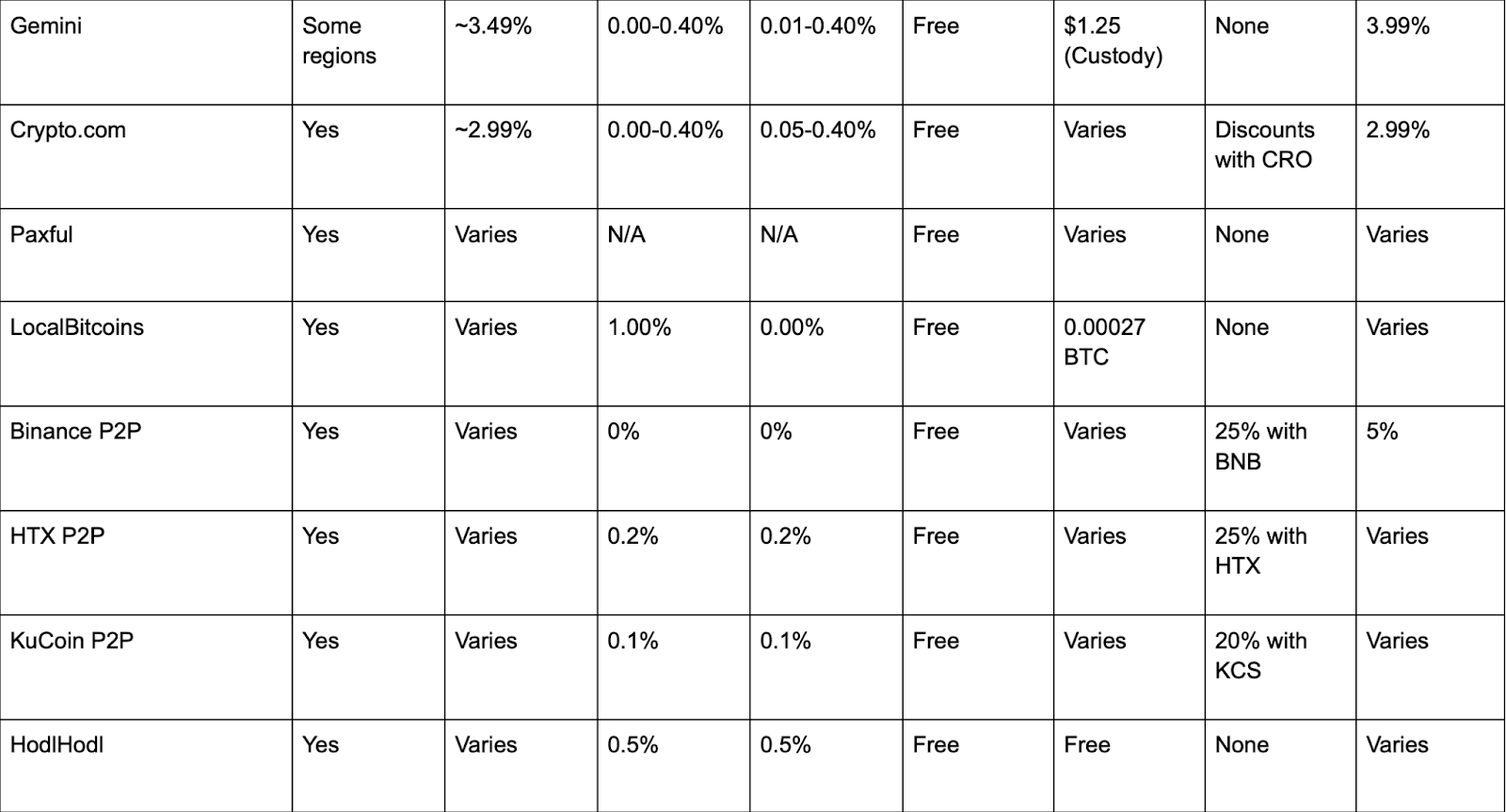
For DeFi-native traders, decentralized exchanges like Uniswap or Curve can offer 0.01–0.3% swap fees, but gas costs add complexity. During periods of Ethereum network congestion, a “cheap” 0.3% DEX fee can balloon by several dollars or more in gas, making smaller trades economically unviable.
Key questions to ask before choosing your exchange:
- Do you need to register, or would anonymous trading suit you better?
- How often do you trade, and does the platform reward volume?
- Are you moving large amounts where withdrawal fees become significant?
- Will you be using fiat on-ramps, which typically carry higher charges?
- Does the exchange support the specific coins you want?
Instant Swap Platforms and the No-Registration Advantage
A growing segment of traders is moving away from traditional registered CEXs entirely. The reasons are straightforward: KYC friction, data exposure risk, and the reality that casual swappers rarely generate enough volume to unlock meaningful CEX fee discounts.
Instant swap platforms fill this gap efficiently. They aggregate rates, provide upfront pricing, and execute trades without requiring you to park funds on an exchange. The fee model differs from traditional maker/taker structures — rates are built into the swap rate itself, making total cost transparent before you confirm.
Godex operates as a blockchain-powered exchange in this space with a notably user-first approach. The platform deletes order information after two weeks and never collects personal data, addressing one of the real concerns traders have about centralized data storage. Transparent exchange rates, fast execution, and a wide selection of over 900 coins make it a strong option for anyone who values privacy alongside cost efficiency. For those interested in the platform beyond personal trading, Godex also offers an affiliate program where partners earn up to 0.6% of transaction volume, with a 0.005 BTC welcome bonus for new registrations.
Smart Strategies to Reduce Your Exchange Fees in 2026
Knowing the fee landscape is half the battle. The other half is actively using strategies that keep more capital in your hands.
The most consistent fee-reduction method on centralized exchanges is placing limit orders rather than market orders. Maker orders — those that sit on the order book and add liquidity — almost universally attract lower fees than taker orders that execute immediately. On many platforms, the difference is 30–50% in fee terms for the same trade size.
Native token discounts are the second major lever available to active traders. Holding a platform’s utility token and enabling fee payment in that token typically delivers a 25–60% reduction. The trade-off is holding an asset that carries its own price risk, so this strategy works best for traders who already use the exchange heavily.
Network selection matters enormously for withdrawals. Moving USDC on Tron (TRC-20) is significantly cheaper than moving it on Ethereum (ERC-20). Always check the fee breakdown by network before withdrawing, and choose the most cost-effective chain compatible with your destination wallet.
For swap-focused traders without high volume, comparing instant swap platforms before committing to a trade takes less than a minute and can save meaningful amounts, especially on larger transactions where spread differentials compound.
Conclusion: The Real Lowest Fee Exchange Is the Right One for Your Strategy
Fees in 2026 are lower than ever on paper — but the gap between headline rates and real costs has never been more important to understand. Binance and KuCoin lead traditional CEXs at 0.10% base rates, MEXC pushes maker fees to zero, and Coinbase remains the premium-priced entry point for beginners. Beyond the order book model, no-registration instant swap platforms like Godex offer a compelling alternative for traders who prioritize transparency, privacy, and simplicity over volume-discount tiers.
The lowest fee exchange isn’t always the one with the smallest number on a comparison table. It’s the platform whose total cost structure — trading fees, spreads, withdrawals, and the value of your time and data — aligns best with how you actually trade. Run those numbers, compare honestly, and let your strategy drive the decision.
Start a Cryptocurrency exchange
Try our crypto exchange platform
Disclaimer: Please keep in mind that the content of this article is not financial or investing advice. The information provided is the author’s opinion only and should not be considered as direct recommendations for trading or investment. Any article reader or website visitor should consider multiple viewpoints and become familiar with all local regulations before cryptocurrency investment. We do not make any warranties about reliability and accuracy of this information.
Read more
You may well think that an article dedicated to a Tether price prediction or the Tether price in general is a little bit strange — it is a stablecoin after all. However, the price of Tether does fluctuate significantly, although it is nowhere near as volatile as non-stablecoin cryptos. This means that staying up to […]
In the article we share our vision at Zcash cryptocurrency main features and add several price predictions. As cryptocurrencies gain global acceptance and decentralisation slowly enters our lives, privacy becomes the main concern when talking about blockchain adoption. It is no secret that distributed ledger is by far the most secure and transparent technology ever […]
Chiliz coin (CHZ) offers a compelling opportunity for traders interested in the intersection of blockchain technology and sports. By enabling fans to influence team decisions through the Socios app, Chiliz directly monetizes fan engagement and connects with major sports teams like Juventus and Paris Saint-Germain. These partnerships not only enhance the platform’s visibility but also […]
The exponential growth of Bitcoin Satoshi Vision (BSV) against the general bear trend on the cryptocurrency market in autumn 2019 has impressed the community. Due to the increasing market capitalization, the newly emerged altcoin was ranked 5th on CoinMarketCap and managed to maintain its high position at the beginning of 2020. In the article we […]
EOS is definitely on the list of the strongest and most stable projects in the crypto world. Despite the fact that the currency entered the market less than 3 years ago, it consistently occupies one of the top 10 places in the rating for project capitalization. it is often called the “main competitor of Ethereum”. […]
XRP price prediction 2026-2027: bear, base, and bull scenarios with ranges and named sources, the resolved SEC case, live spot ETFs, and can XRP reach $10?